Introduction: Understanding Hydraulic Baler Economics
Let's talk about a workhorse of the recycling industry that doesn't get enough spotlight – hydraulic balers. You've probably seen these machines humming away in scrapyards or recycling facilities, transforming heaps of loose scrap into neat, compact bundles. Behind that satisfying compression is a complex interplay of hydraulic force and mechanical engineering that comes with its own economic story.
When we dive into the cost structure of these machines, it's not just about slapping price tags on components. It's about understanding how material choices, engineering trade-offs, and manufacturing processes ultimately determine why one baler might cost 30% more than another, yet deliver 50% more value over its lifetime. We'll peel back the layers on those critical components that make hydraulic balers tick, exploring where the dollars really go when you invest in these mechanical marvels.
The Heartbeat of the Machine: Hydraulic Systems
If hydraulic balers had a heart, it would be their hydraulic systems. This is where your investment makes the biggest impact. Picture the hydraulic system as the muscle behind every compression cycle – that satisfying crunch when scrap metal surrenders to pressure? That's hydraulic power in action.
Hydraulic Pumps: The Pressure Generators
Let's break down what you're paying for in hydraulic pumps. Gear pumps might cost $800-$1,200 and handle lighter duties efficiently, but when you step up to piston pumps ($2,500-$5,000), you're paying for their ability to maintain pressure under extreme loads without breaking a sweat. The difference comes down to precision engineering – think hardened steel components with microscopic tolerances that justify the premium.
Cylinders: Power Translators
Those massive cylinders converting fluid power into mechanical force have their own cost narrative. A standard cylinder might set you back $1,200-$2,500, but when you need one capable of delivering bone-crushing 5,000 psi pressure? Now you're looking at $4,000-$7,000 for specialized chrome-plated rods, reinforced seals, and hardened barrels. Every dollar here buys you longevity against relentless compression cycles.
The hydraulic fluid reservoir might seem simple, but its manufacturing involves thick steel plates (typically 10-15mm) cut with precision using CNC technology, then welded with automated gas-shielded techniques to prevent leaks – processes that collectively add $800-$1,500 to the component cost. Meanwhile, valves and controls featuring proportional solenoid technology can cost $300-$1,000 each, with premium imports commanding a 20-40% premium over domestic equivalents.
Framework and Structure: The Mechanical Backbone
Ever wondered why some balers seem to shrug off abuse while others warp under pressure? It's all in their structural bones – specifically grade A36 steel for standard models versus hardened 4140 alloy steel in premium versions. That material upgrade alone can add 15-25% to structural costs, but extends service life by years in heavy-duty recycling environments.
| Component | Cost Range | Cost Drivers | Cost-Saving Alternatives |
|---|---|---|---|
| Main Frame (Standard) | $3,200 - $5,500 | Material grade, welding complexity, structural reinforcement | Modular designs with bolt-on reinforcement |
| Platen/Compression Plate | $1,800 - $4,200 | Hardness treatment, wear-resistant coatings, geometric precision | Hardox steel plates with local treatment |
| Door/Locking Mechanism | $950 - $2,100 | Hydraulic locking vs mechanical, interlock safety systems | Dual-stage mechanical locks with override |
Let's talk about the compression chamber design – it's not just a box. When manufacturers implement reinforced corner gussets and stress-distributing geometries, they're preventing micro-fractures that lead to costly downtime. That extra 8-10% in manufacturing costs? It buys you years of trouble-free operation in facilities processing hundreds of tons monthly.
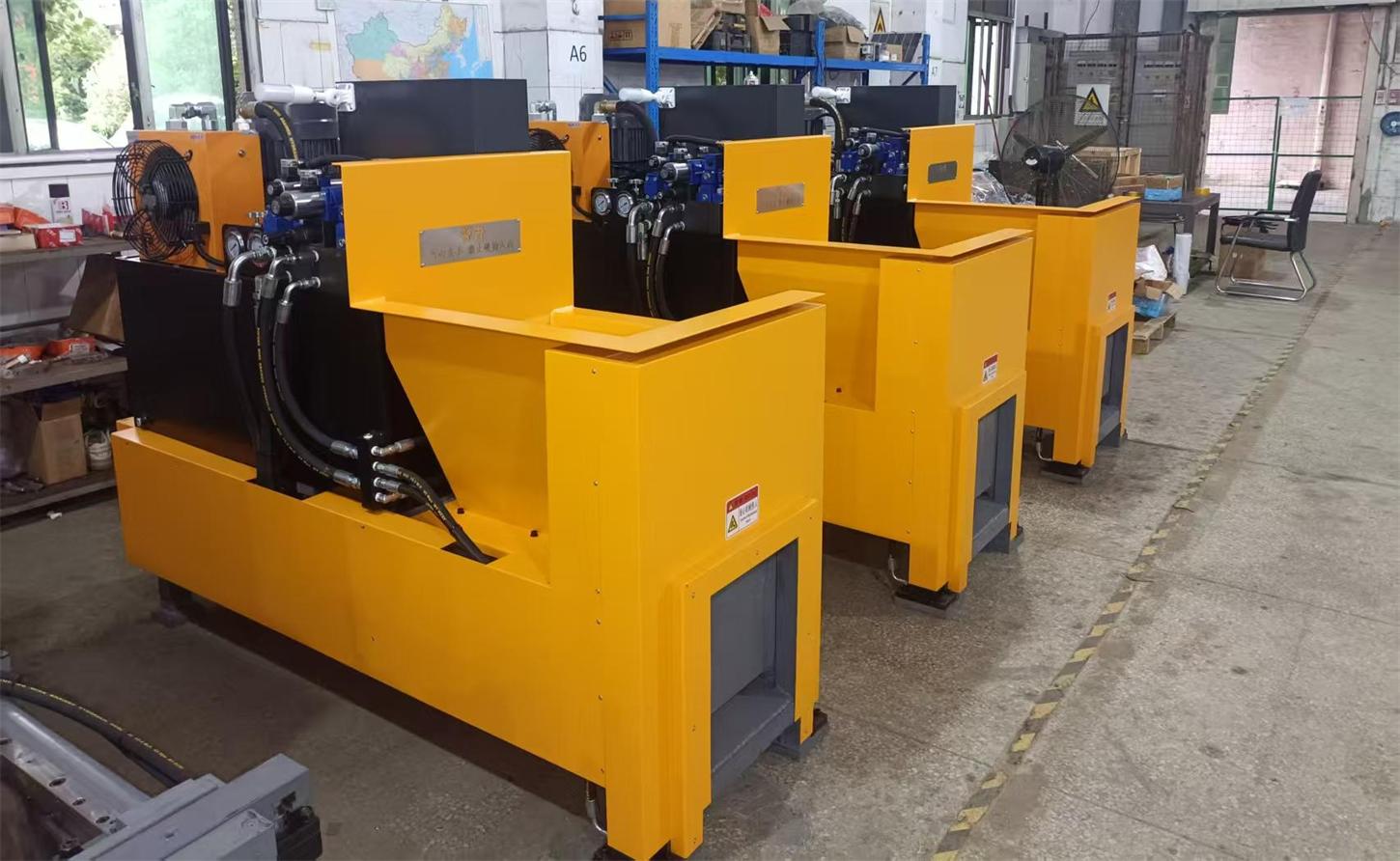
And those hydraulic power pack enclosures aren't just metal boxes – they're strategically designed for heat dissipation and noise reduction. Add 5-8mm thick acoustic damping material plus cooling fins to the design, and you've added $300-$500 to the component cost, but created a machine that operates 8dB quieter – a meaningful difference in worker comfort during 10-hour shifts.
Control Systems: The Brains Behind the Brawn
Modern balers have evolved from simple lever-operated machines to sophisticated systems with controller prices ranging from $1,200 for basic models to $12,000+ for fully automated units with IoT connectivity. Where does that money go? Let's break it down.
A $2,500 PLC setup will reliably handle basic functions, but step up to the $7,500 range and you're getting real-time pressure monitoring that optimizes cycles for energy efficiency – saving 12-18% in power costs over the machine's lifetime. That touchscreen interface might cost an extra $850, but eliminates three mechanical switches and reduces wiring complexity.
Sensors: The Unseen Guardians
Those pressure transducers costing $120-$250 each? They're your first line of defense against catastrophic failures, detecting pressure spikes that indicate jams before they bend your cylinder rods. Position sensors ($85-$180) ensure the ram retracts fully before the door opens – a critical safety feature with tangible ROI in prevented accidents.
Consider operational data recording systems – they might add $1,200-$2,500 to the component cost, but provide actionable insights on throughput patterns that help optimize staffing. Meanwhile, remote monitoring modules (additional $1,500-$3,000) transform reactive maintenance into predictive upkeep, reducing downtime by 30-50% in typical recycling operations.
Pneumatic and Auxiliary Systems: Supporting Cast
Don't overlook the supplementary systems that keep hydraulics performing optimally. Hydraulic oil coolers ($900-$2,200) are mandatory for continuous operation in demanding environments – without them, oil degrades 3x faster in heavy cycling conditions. Meanwhile, filtration systems costing $350-$950 prevent particulate contamination that accounts for nearly 60% of hydraulic component failures.
The conveyor integration interface isn't just a mechanical connection point. Modern balers feature position-adjustable mounting brackets and CAN bus communication protocols that add $1,100-$2,500 to auxiliary costs, but enable seamless material transfer synchronization that boosts system throughput by 15-25%.
Consider safety systems too – light curtains and emergency stops ($450-$850 per set) aren't just regulatory requirements; they're insurance policies against costly workplace incidents. When you calculate the true expense of even minor injuries – from lost productivity to increased insurance premiums – these components deliver an extremely fast ROI.
Manufacturing & Assembly: Where Costs Materialize
The journey from raw steel to functioning baler involves multiple value-added stages. Laser cutting precision for frame components adds $25-$45 per machine hour but ensures assembly tolerances under 0.5mm. Meanwhile, robotic welding stations commanding $80-$150 per hour provide consistent penetration strength critical for structural integrity.
Hydraulic Integration Expertise
The assembly stage where hydraulic systems integrate with mechanical frames requires skilled technicians earning $35-$55/hour – talent justified by their ability to torque connections to exact specifications and bleed systems for peak performance. A single improperly assembled fitting can cause $8,000 in downstream damage from hydraulic leaks.
Testing protocols reveal hidden costs many overlook. Pressure cycling tests consuming 3-5 hours per machine ($180-$400 value) identify seal imperfections before shipment. Load simulation using specialized equipment ($75-$125 per test hour) validates structural performance beyond theoretical calculations. These stages add 12-18% to production costs but virtually eliminate early-life failures.
Even painting has cost implications – industrial epoxy coatings with UV inhibitors and corrosion resistance additives cost 60-80% more than standard finishes, but prevent 5x more frame deterioration in humid recycling environments where constant material handling accelerates wear.
Throughput Analysis: Capacity Economics
Let's talk about the relationship between component choices and operational efficiency. A baler designed for 20 cycles per hour might cost $85,000, while a 35-cycle model commands $140,000. Where does that premium go? Primarily into hydraulic accumulators ($2,500-$5,500) that store energy during decompression for faster cycle initiation, and larger displacement pumps that add $1,800-$3,800 to component costs.
| Capacity Factor | Cost Impact | Component Implications | Operational Payback |
|---|---|---|---|
| Cycle Speed Increase (20 → 30/min) | +$12,500 - $18,000 | High-response valves, accumulator systems | Payback in 14-18 months for high-volume sites |
| Pressure Increase (2500 → 5000 psi) | +$8,200 - $15,000 | Heavy-walled cylinders, reinforced hoses | 3:1 density improvement extends transport efficiency |
Consider chamber size economics too. Expanding from standard 60" chambers to 84" models adds $6,500-$11,000 in frame and hydraulic costs, but reduces material handling requirements by enabling larger bales. When you calculate labor minutes saved per cycle multiplied across thousands of cycles annually, this upgrade often pays for itself within two years in facilities processing over 8,000 tons annually.
Material Science Matters: Selection Economics
Component material choices significantly influence both initial costs and long-term value. Consider cylinder rods – chrome plating adds 20-25% to base costs but provides wear resistance that extends service life 3-5x in abrasive environments filled with metal dust.
Hydraulic seals represent another material cost intersection. Standard nitrile seals might cost $8-$15 per set, while fluorocarbon versions run $45-$75. That premium buys you resistance to higher temperatures (preventing degradation during extended cycles) and compatibility with more aggressive hydraulic fluids – factors that prevent 80% of hydraulic leaks in demanding applications.
Even frame material selection has evolving economics. Traditional carbon steel framing might cost $18-$25 per kg fabricated, while high-strength low-alloy (HSLA) alternatives command $28-$38 per kg. The trade-off? HSLA frames achieve similar strength with 15-20% less material, offering weight savings that reduce foundation requirements and shipping costs.
Lifecycle Cost Analysis: Beyond Purchase Price
Smart buyers evaluate hydraulic balers through a total-cost-of-ownership lens. Premium components typically deliver 2-4x longer service life, fundamentally changing replacement economics.
The Hidden Cost of Downtime
When a $950 standard cylinder fails, it's not just the replacement cost – it's the 8-12 hours of lost production time while technicians repair it. That downtime can cost $1,800-$4,200 in a busy recycling operation. Compare that to a $2,200 industrial-grade cylinder that delivers 13,000 cycles between servicing – the math shifts dramatically in favor of premium components.
Energy consumption reveals another dimension. Hydraulic systems incorporating pressure-compensated pumps and flow control valves add $1,800-$3,200 to component costs but reduce energy consumption by 25-35% during typical cycles. Over a 10-year lifespan at industrial electricity rates, this delivers $15,000-$25,000 in operational savings that dwarf the initial premium.
Even simple design choices like easily replaceable wear plates (adding $300-$500 to manufacturing costs) can save thousands in maintenance labor over years of operation. It's these considerations that separate cost-focused purchasing from true value engineering.
Key Takeaways: Balancing Cost and Performance
Wrapping up our cost exploration, several principles emerge for anyone evaluating hydraulic baler investments:
Hydraulic components deserve priority funding – they're the circulatory system of your baler. That extra 15-20% spent on premium pumps and cylinders typically yields 40-60% longer service intervals and consistent performance under load.
Structural integrity isn't optional – saving $4,500 by accepting lighter frame construction leads to alignment issues costing triple that in premature component wear over 5-7 years. Proper structural design using durable materials ensures the entire machine works as an integrated system.
Smart controls pay dividends – advanced PLC systems adding $3,000-$5,000 to your initial investment typically deliver $15,000-$30,000 in optimized throughput and energy savings over a decade of operation while providing critical operational diagnostics.
Finally, maintainability designs offer hidden returns – components positioned for easy access might add 5-8% to manufacturing costs but save countless hours in maintenance labor while encouraging proactive upkeep that prevents major failures. It's the difference between owning equipment and being owned by equipment.
Whether considering a standard scrap electric motor recycling machine for lighter duties or industrial-scale solutions for high-volume metal processing, understanding these cost fundamentals empowers smarter investment decisions that balance immediate budgets against long-term operational excellence.