If you've ever visited a scrapyard or recycling facility, you know what chaos looks like: piles of twisted metal, jagged edges of discarded machinery, and mountains of material that seem impossible to organize. The noise alone—clanging, grinding, crunching—gives you a headache. Now imagine transforming that chaos into neat, compact packages ready for shipping. That's exactly what hydraulic scrap steel balers do, and they're not just tidying up—they're boosting profitability at every step of the recycling journey.
Metal recycling isn't just about being environmentally friendly—it's big business. But here's the problem: scrap metal in its raw form is a logistical nightmare. Think about it:
- It takes up huge amounts of space
- Transport costs eat into profits
- Sharp edges create safety hazards
- Loose material easily gets contaminated
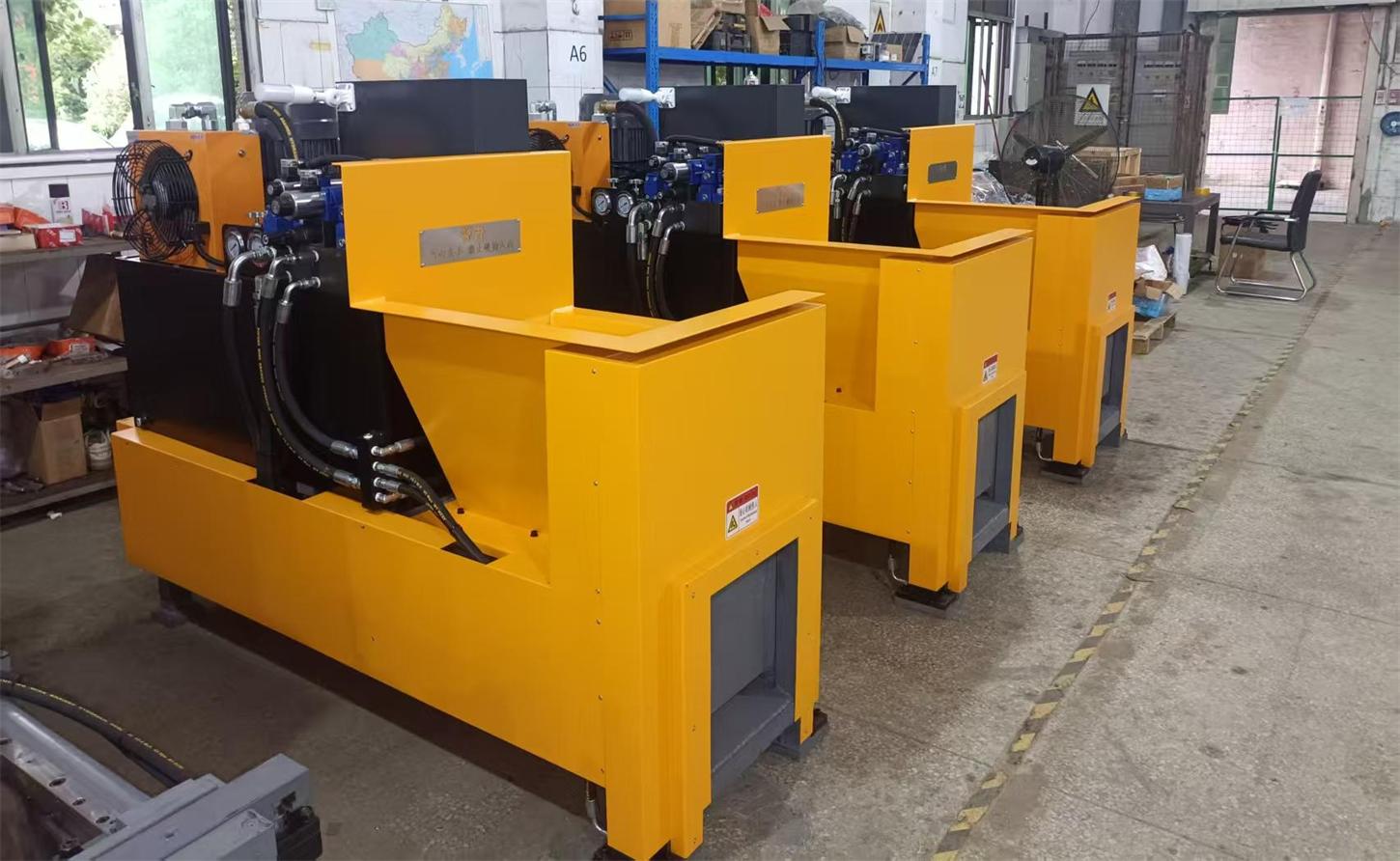
At its core, hydraulic baler operation relies on Pascal's Law: pressure applied anywhere to an enclosed liquid transmits equally in all directions. Here's how this translates to your bottom line:
- Hydraulic pump converts mechanical energy into fluid pressure
- Cylinders multiply this force - generating pressures equivalent to hundreds of tons
- Steel jaws compress material into dense blocks with up to 90% volume reduction
It's this force multiplication that makes scrap balers so effective. Even lightweight metals like aluminum cans transform from bulky waste into valuable, space-efficient resources ready for smelters.
Consider this before-and-after scenario:
| Scenario | Storage Space Needed | Transport Trips Required |
|---|---|---|
| Unprocessed Scrap | 10,000 sq ft warehouse | 25 truckloads/month |
| Balanced Material | 1,500 sq ft warehouse | 4 truckloads/month |
Suddenly, that expensive warehouse space can be repurposed for profit-generating activities. Fewer transport trips mean lower fuel costs, reduced vehicle wear-and-tear, and minimized carbon footprint—all while increasing throughput.
Balers don't just compress—they add value through:
- Density premiums : Smelters pay more for compact material that fits efficiently in furnaces
- Reduced contamination : Tightly packed bales resist moisture and dirt infiltration
- Standardization : Uniform bale sizes simplify automated handling at processing facilities
The impact? Operations routinely see 15-30% increases in per-ton revenue simply by processing scrap through modern balers.
Manual scrap handling isn't just inefficient—it's dangerous. Hydraulic balers change the game:
- Automated feeding systems process tons of material per hour with minimal human intervention
- Programmable Logic Controllers (PLCs) ensure consistent bale quality with precise pressure settings
- Remote monitoring allows single operators to manage multiple machines
You're not just saving on labor costs—you're also reducing workplace accidents and insurance premiums while increasing throughput.
Advanced balers capture value that used to end up in landfill:
- Fluff separation systems recover non-metallic materials for recycling
- Fugitive material capture ensures loose fragments don't escape
- Integrated sorting identifies metal types for optimal baling parameters
This comprehensive approach means recovering up to 98% of input material as saleable product—a dramatic improvement over the 70-80% recovery rates of manual operations.
Simply having a baler isn't enough—optimizing its operation transforms it from a machine to a profit center. Here's how the pros do it:
Different metals require different approaches:
- Ferrous metals : Need maximum pressure (800+ tons) to overcome their rigidity
- Non-ferrous metals : Require precision control to avoid crushing valuable components
- Mixed materials : Benefit from multi-ram systems that handle varied density requirements
Neglected balers become profit drains. Smart operators focus on:
- Hydraulic system checks weekly to prevent leaks and pressure drops
- Component replacement schedules for cutting blades and seals before they fail
- Chamber cleaning protocols to prevent material buildup that reduces efficiency
Preventative maintenance programs typically yield 5-7% improvements in throughput and extend machine life by years.
Cycle time—how long each baling sequence takes—dramatically impacts output:
- Standard balers : Complete cycles in 60-90 seconds
- High-efficiency models : Process bales in 30-60 seconds
- Industrial systems : Achieve blistering speeds under 30 seconds
The proof comes from actual recycling operations that transformed their profitability:
Before modernization:
- Storage capacity maxed at 300 tons
- Required 8 manual sorters per shift
- Annual net profit: $1.2 million
After installing two hydraulic balers:
- Storage capacity tripled to 900 tons
- Manual staff reduced to 3 per shift
- Annual profit jumped to $4.3 million
Specializing in end-of-life vehicles:
- Previously shipped uncompressed car bodies
- Transport consumed 35% of revenue
- Invested in high-force hydraulic baler
- Now compress car bodies into 1m³ cubes
- Transport costs dropped to 12% of revenue
- Profit margin increased by 68%
Hydraulic scrap steel balers represent more than machinery—they're economic multipliers that reshape recycling:
- Space transformation : Turn dead storage into productive space
- Labor reallocation : Shift workers from dangerous handling to higher-value roles
- Transport revolution :Move more material in fewer vehicles
- Quality control : Produce consistent, high-value products reliably
The efficiency gains extend beyond individual facilities too. When compacted bales arrive at smelters, metal melting furnace operations become significantly more efficient—better heat distribution, reduced processing time, and increased material yield. This creates a virtuous cycle where both recyclers and smelters benefit financially.
The next generation of balers incorporates exciting innovations:
- AI-driven optimization : Systems that analyze material types in real-time to adjust pressure and cycles
- Energy recovery systems : Capturing hydraulic energy during decompression to power compression cycles
- Integrated analytics : Tracking production data to predict maintenance needs and optimize efficiency
The journey from chaotic scrap piles to efficient, profitable recycling operations relies fundamentally on hydraulic compression technology. More than just crushing metal, balers are reshaping the entire economics of material recovery, creating sustainability and profitability in a single powerful cycle. From warehouse to metal melting furnace, compressed bales create compressed costs—and expanded profits.