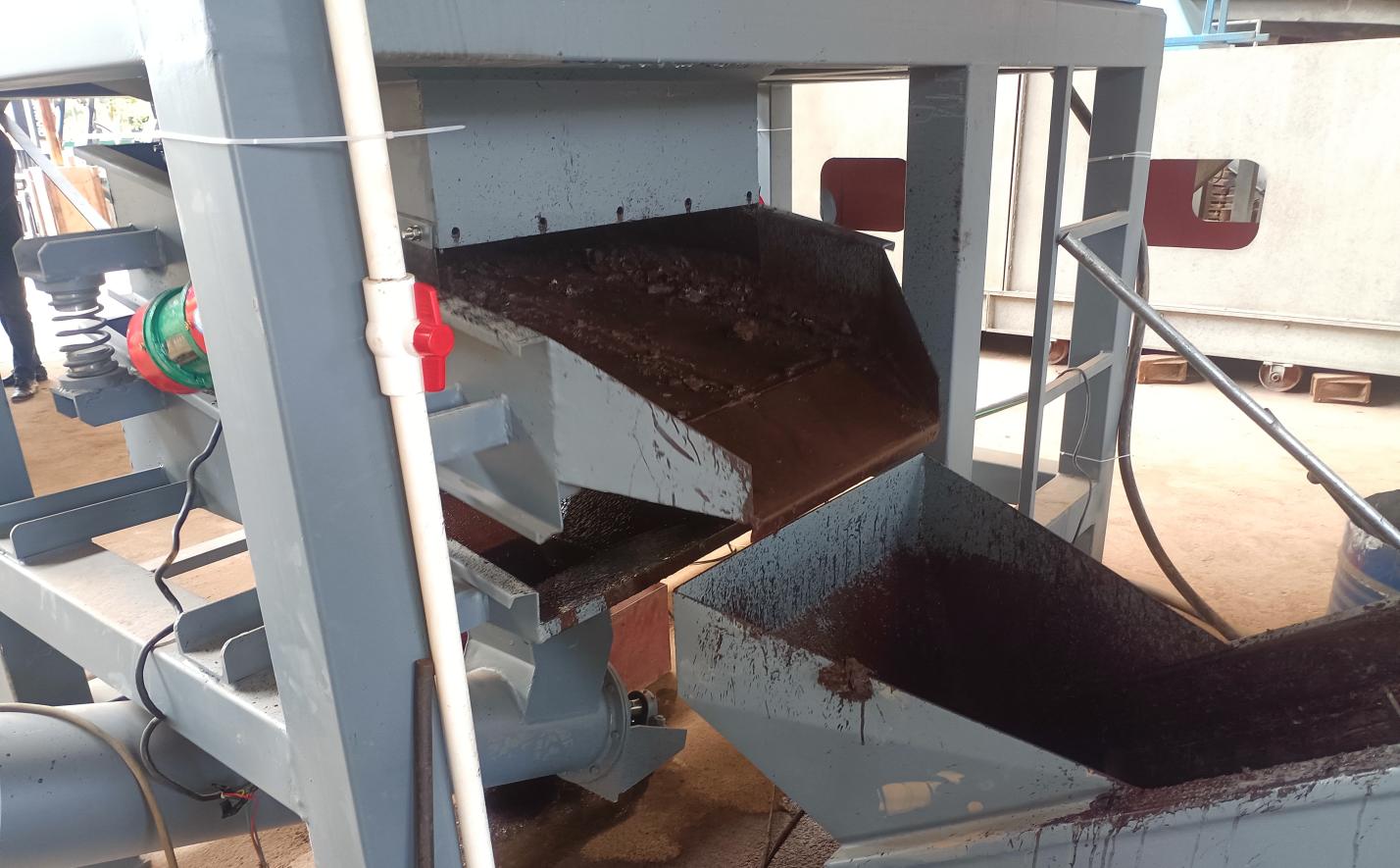
The race for sustainable lithium extraction has found its champion in adsorption-based Direct Lithium Extraction (DLE) technology. This game-changing approach solves critical limitations of traditional methods through its molecular precision, delivering industry-leading recovery rates above 95% while dramatically reducing environmental impacts.
The Lithium Imperative
Global lithium demand is projected to increase tenfold by 2030, driven by clean energy technologies and electric mobility. Traditional extraction methods simply can't scale sustainably: Solar evaporation ponds waste thousands of cubic meters of water per ton of lithium and require vast land areas, while hard rock mining carries heavy carbon penalties. This unsustainable trajectory created an urgent need for advanced brine lithium extraction systems capable of high recovery efficiency with minimal ecological disruption.
Molecular Matchmaking
At the heart of adsorption DLE lies the lithium-specific sorbent - typically aluminum-based composite materials engineered at the atomic level. These sorbents feature crystal structures with precisely-sized tunnels that function like molecular locks. Lithium ions fit perfectly into these tunnels through intercalation, while larger magnesium and sodium ions are excluded. This selective capture mechanism enables recovery even from complex brines containing 10-100x more competing ions than lithium.
The Temperature Effect
Heat acts as the control switch for the adsorption-desorption cycle. At ambient brine temperatures around 25°C, lithium ions diffuse into the sorbent's atomic layers. When temperature increases to 60-80°C during desorption, the lattice structure expands, releasing concentrated lithium chloride solution. This thermal cycling enables continuous operation without chemical destruction of the sorbent material.
Raw brine undergoes preparatory treatment to remove solids, organics, and scale-forming minerals. Nanofiltration membranes may pre-concentrate lithium while rejecting divalent cations like magnesium.
Pre-treated brine flows through adsorption columns containing specialized aluminum-based sorbent media. Lithium ions are captured through an intercalation mechanism while >90% of competing ions pass through.
Warm dilute lithium solution washes the loaded sorbent, triggering lattice expansion that releases concentrated LiCl (10-30x original concentration). Thermal energy requirements are minimized through heat exchangers recovering >85% of process heat.
The lithium-rich eluate undergoes final purification through ion exchange or nanofiltration before conversion to battery-grade lithium carbonate or hydroxide via electrochemical processes.
The critical advantage? A closed-loop brine recycling system prevents water loss to evaporation and enables reinjection of depleted brine. Recent innovations in brine lithium extraction system design have boosted these recovery rates from 85% to over 95% by optimizing sorbent regeneration cycles and eliminating lithium leakage pathways.
| Technology | Recovery Rate | Process Duration | Li/TDS Ratio | Commercial Status |
|---|---|---|---|---|
| Adsorption DLE | 90-95% | Hours to days | Li increased 2-10x | TRL 9 (Commercial) |
| Ion Exchange DLE | 70-85% | Days | Li increased 10-20x | TRL 7-8 (Pilot) |
| Solvent Extraction | 60-75% | Hours | Requires pre-concentration | TRL 7-8 |
| Evaporation Ponds | 40-60% | 18-24 months | Marginal improvement | Traditional method |
Why Recovery Rates Differ
The adsorption advantage emerges from three fundamental design factors:
- Hydration Shell Manipulation: Optimal salinity levels help "relax" the hydration shell surrounding lithium ions, enabling deeper intercalation into the sorbent matrix
- Thermal Efficiency: Advanced heat recovery systems minimize energy penalties during the desorption phase
- Flow Optimization: Counter-current column designs with optimized residence times prevent lithium slippage
Water & Carbon Advantages
Modern adsorption DLE plants have reduced freshwater consumption to 11-70 m³ per tonne of lithium carbonate compared to 370-3,700 m³ for evaporation ponds. When integrated with renewable heat sources like geothermal brines, carbon footprints plummet to 2.5-3 tonnes CO₂ per tonne versus 20+ tonnes for hard rock mining.
Land & Chemistry Savings
Instead of sprawling evaporation ponds covering thousands of acres, adsorption DLE requires processing footprints of approximately 16 m² per tonne. The process eliminates acidic stripping chemicals used in competing DLE methods, reducing chemical consumption by 60-80% compared to ion exchange alternatives.
Brine Compatibility Factors
Optimal adsorption requires brine-specific engineering adjustments:
- Lithium Concentration: Minimum 100 mg/L for economic operation
- Salinity Profile: Total dissolved solids must enable hydration shell relaxation
- Temperature Requirements: Geothermal brines provide natural advantages
For example, Argentina's Hombre Muerto brine (780 mg/L Li) achieves 95% recovery through adsorption, while lower-grade resources might require pre-concentration steps.
Sorbent Longevity
Field data from commercial plants shows sorbent degradation rates of just 2-5% annually when properly engineered. Factors influencing longevity include:
- Mechanical stability optimization to prevent attrition losses
- Oxidation protection coatings
- Periodic thermal regeneration cycles
Leading installations demonstrate adsorption technology's capabilities:
- Arcadium Lithium (Argentina): Continuous operation since 1997 with <95% recovery at Hombre Muerto
- Sunresin/EVE Energy (China): 10,000 tpa lithium carbonate production from low-grade brines (100-120 mg/L Li)
- Eramet (Argentina): New 24,000 tpa DLE plant commissioning with adsorption technology
The Path Forward
Adsorption DLE's 95% recovery milestone represents more than a technical achievement—it's the foundation for sustainable lithium supply chains. Next-generation sorbents now in development promise even higher selectivity ratios exceeding 500:1 against sodium ions while reducing energy requirements by 40%. As these innovations combine with modular plant designs optimized for geothermal resources, adsorption technology is poised to unlock 70% of the world's lithium brine resources previously considered uneconomical, accelerating our transition to electrified transport and renewable energy systems.
The key to successful implementation lies in recognizing adsorption DLE not as an off-the-shelf solution, but as a customizable platform requiring brine-specific engineering. By tailoring sorbent formulations, pretreatment systems, and thermal integration strategies to each unique deposit, developers can consistently achieve the 95% recovery benchmark that makes sustainable lithium production economically viable.