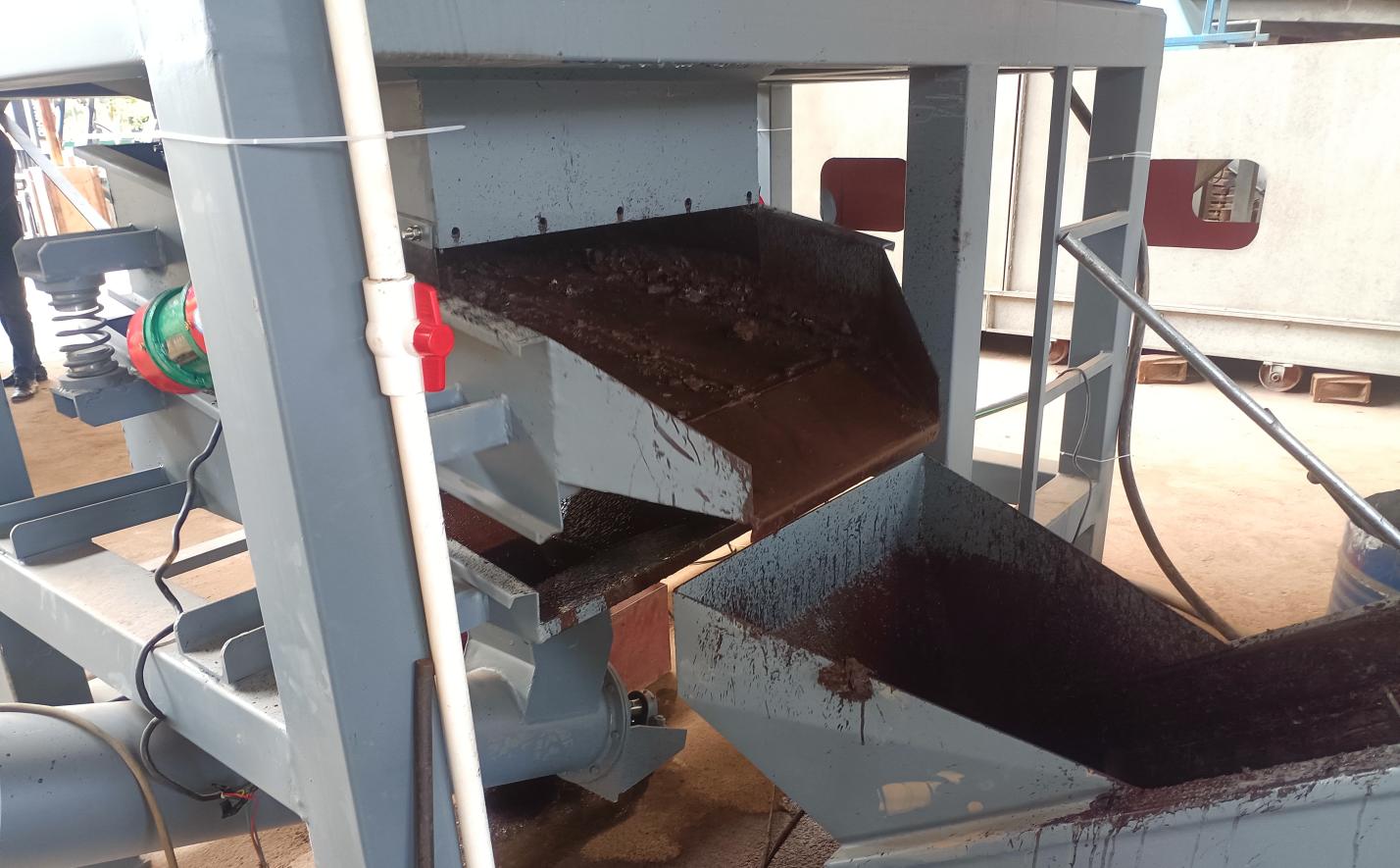
In the fast-paced world of recycling, where every piece of equipment plays a critical role in turning waste into reusable resources, the relationship between a recycling facility and its equipment supplier is more than just a transaction—it's a partnership. Nowhere is this truer than when procuring specialized machinery like filter press equipment, a cornerstone of efficient solid-liquid separation in processes ranging from wastewater treatment to mineral extraction. Yet, even the most advanced filter press can fall short of expectations if the supply and service agreement governing its purchase is vague, incomplete, or misaligned with operational needs.
A well-crafted agreement doesn't just outline who pays what and when; it acts as a roadmap for collaboration, ensuring both parties understand their responsibilities, risks, and goals. This is especially critical in the recycling industry, where equipment must often work in tandem with complementary systems—think air pollution control system equipment to meet emissions standards or water process equipment to handle effluent. Without clear terms, facilities risk costly delays, compliance violations, or equipment that fails to integrate with existing operations. Let's dive into the key elements that should never be missing from a filter press supply and service agreement.
1. Scope of Supply: Defining "What's Included?"
The first step in any agreement is to clearly articulate what exactly is being supplied. For filter press equipment, this goes beyond the machine itself. A vague line like "one filter press unit" is a recipe for conflict. Instead, the scope should leave no room for ambiguity, detailing:
Core Equipment: Model number, size (e.g., 1000mm filter plates), material (stainless steel vs. polypropylene), filtration area, and maximum operating pressure. If the press is custom-built for high-viscosity slurries or corrosive materials, these specifications must be explicitly stated.
Ancillary Components: Pumps, valves, control panels, and sensors. For example, does the supply include a variable frequency drive for the feed pump, or is that an add-on? What about spare filter cloths—a critical wear item—or hydraulic fluid for the closing mechanism?
Related Systems Integration: If the filter press is part of a larger setup, such as a water process equipment line, the agreement should clarify whether the supplier is responsible for ensuring compatibility with existing systems (e.g., connecting to a pre-filtration tank or post-press sludge conveyor).
Services: Installation, commissioning, operator training, and initial startup support. Is on-site installation included, or does the buyer handle it? How many training sessions are provided, and for how many staff members?
Consider a scenario where a recycling plant orders a filter press expecting it to arrive "ready to run," only to discover the supplier considers installation a separate service. Without this spelled out, the plant might face weeks of downtime while arranging for third-party installers—all because the scope was poorly defined.
2. Technical Specifications and Performance Guarantees
Recycling operations rely on predictable performance. A filter press that (promises) a filtration rate of 500 liters per hour but only delivers 300 can derail production schedules and increase operating costs. That's why technical specifications must be paired with measurable performance guarantees.
Key metrics to include:
- Filtration Efficiency: Minimum solids capture rate (e.g., 99.5% for fine particulate) or maximum moisture content of the filter cake (e.g., ≤25% for municipal sludge).
- Cycle Time: Maximum time to complete a full cycle (filling, pressing, cake discharge) under standard operating conditions.
- Durability: Expected lifespan of critical components (e.g., filter plates warrantied for 5 years or 10,000 cycles).
Equally important is how these guarantees will be verified. Will the supplier conduct a performance test at their factory before shipment, or will testing occur on-site after installation? Who bears the cost if the equipment fails to meet targets—does the supplier repair/replace components, or is a partial refund offered? For example, if air pollution control system equipment is part of the order, its emission reduction efficiency (e.g., 98% removal of particulate matter) should be similarly guaranteed and testable.
3. Delivery, Inspection, and Acceptance Terms
Timing is everything in recycling operations, where delays in equipment delivery can disrupt waste processing schedules and lead to regulatory penalties for accumulating unprocessed materials. The agreement must therefore include a detailed delivery timeline with clear milestones:
Manufacturing Lead Time: How long until production begins, and how long until the equipment is ready for shipment? Are there penalties for delays (e.g., 0.5% of the contract value per week late, up to a cap)?
Shipping Responsibilities: Who arranges transportation, and under what Incoterm? EXW (Ex Works) means the buyer handles shipping from the supplier's factory, while CIF (Cost, Insurance, Freight) places that burden on the supplier. Clarifying this avoids disputes over damaged goods in transit—if the supplier is responsible for insurance, they should coordinate claims if the press arrives dented or with broken parts.
Inspection and Acceptance: Upon delivery, the buyer should have a defined window (e.g., 7 days) to inspect the equipment for damage or missing components. For performance acceptance, the agreement might specify a 30-day trial period where the filter press operates under normal conditions; if it meets the guaranteed metrics during this time, formal acceptance is granted. If not, the supplier must rectify the issues within a reasonable timeframe.
4. Payment Terms: Balancing Security and Trust
Payment terms are often a sticking point, as suppliers want upfront security while buyers prefer to pay only after verifying quality. A fair agreement strikes a balance with milestone-based payments:
| Payment Milestone | Typical Percentage | Trigger Condition |
|---|---|---|
| Deposit | 20-30% | Upon signing the agreement to secure production slots |
| Progress Payment | 30-40% | After manufacturing is complete and buyer approves factory inspection |
| Final Payment | 30-45% | Upon successful on-site acceptance and delivery of all documentation (manuals, certificates) |
| Retention | 5-10% | Held for 6-12 months post-acceptance to cover any latent defects |
Other details matter too: currency (critical for international suppliers), payment method (bank transfer, letter of credit), and late payment penalties (e.g., 1.5% monthly interest on overdue amounts). A retention clause is particularly valuable for buyers, ensuring the supplier remains invested in resolving issues that arise shortly after startup—such as a faulty hydraulic cylinder that fails three months into operation.
5. Warranty and After-Sales Support: Beyond the Sale
A warranty is more than a legal formality; it's a promise of quality. For filter press equipment, which undergoes heavy wear, a robust warranty can save thousands in unexpected repairs. Key warranty terms include:
Duration: Standard warranties might cover parts for 12 months and labor for 6 months, but extended options (2-3 years) are often available for critical components like hydraulic pumps or control systems. For comparison, air pollution control system equipment might have longer warranties due to stricter regulatory requirements for reliability.
Coverage: What's included? Manufacturing defects (e.g., a cracked filter plate due to poor welding) are typically covered, but wear items (filter cloths, gaskets) are usually excluded. The agreement should also clarify if on-site service calls are covered or if the buyer pays travel expenses for the technician.
Response Time: In the event of a breakdown, how quickly will the supplier respond? A 24-hour phone support guarantee is standard, but for mission-critical equipment, buyers might negotiate 48-hour on-site service for major failures (e.g., a hydraulic system leak that halts production).
Pro Tip: Look for suppliers who offer a "total care package" that includes preventive maintenance visits. For example, a semi-annual check of the filter press's hydraulic fluid, valve seals, and alignment can extend lifespan and prevent unplanned downtime—often at a lower cost than reactive repairs.
6. Compliance and Regulatory Adherence
In recycling, non-compliance with environmental or safety regulations can lead to fines, shutdowns, or reputational damage. The agreement must therefore ensure the filter press—and any integrated systems—meet all applicable standards:
Industry-Specific Certifications: Does the filter press comply with ASME standards for pressure vessels, or CE marking for the EU market? For water process equipment, certifications like NSF/ANSI 61 (for drinking water applications) might be required.
Environmental Compatibility: If the press is used in a lithium battery recycling plant, it must work seamlessly with air pollution control system equipment to capture fumes during sludge drying. The supplier should provide documentation proving the press's emissions (e.g., volatile organic compounds) are within legal limits when operated as directed.
Safety Features: Emergency stop buttons, interlocks to prevent plate movement during maintenance, and guarding for rotating parts. The agreement should require the supplier to provide safety data sheets (SDS) and compliance certificates before final acceptance.
7. Training and Knowledge Transfer
Even the best filter press is useless if operators don't know how to optimize it. A strong agreement includes structured training to ensure the buyer's team can handle routine operation, troubleshooting, and basic maintenance:
On-Site Training: A technician from the supplier visits the facility to train operators on startup, shutdown, cake discharge, and cloth cleaning. Hands-on sessions are far more effective than manual handovers alone.
Documentation: Comprehensive manuals with troubleshooting flowcharts, spare parts lists, and maintenance schedules. Digital copies (PDFs) are essential for easy access, but physical copies can be useful for operators without constant computer access.
Refresher Courses: Optional follow-up training after 6-12 months, when operators have real-world experience and can ask targeted questions about optimizing cycle times or reducing cloth wear.
Conclusion: Building a Partnership, Not Just a Purchase
A filter press supply and service agreement is more than a contract—it's the foundation of a successful long-term partnership. By clearly defining scope, specifications, payments, warranties, and compliance, both buyer and supplier can focus on what matters: keeping the recycling process running smoothly, efficiently, and sustainably. Whether integrating with water process equipment, air pollution control system equipment, or standalone operations, a well-drafted agreement ensures the filter press delivers on its promise—turning waste into value, day in and day out.
In the end, the goal is to minimize surprises. By addressing these key elements upfront, recycling facilities can avoid the headaches of miscommunication and focus on what they do best: building a greener future, one filtered batch at a time.