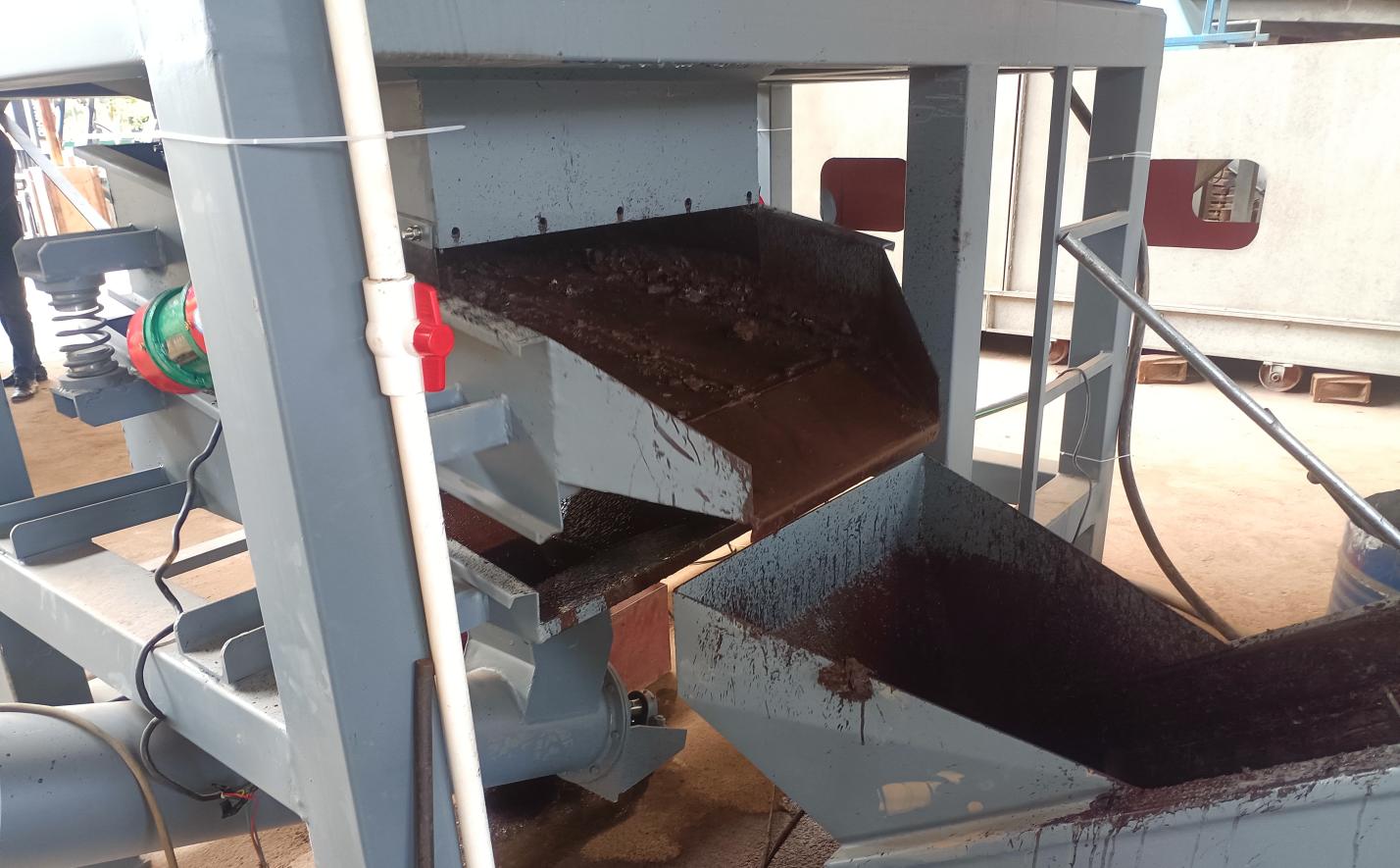
In the bustling world of industrial manufacturing and recycling, few pieces of equipment work as quietly yet crucially as the filter press. It's the unsung hero behind clean water, recovered resources, and compliant waste management—especially when operations scale up to handle tons of material daily. Whether you're running a lead acid battery recycling plant, processing circuit boards, or managing wastewater from a manufacturing facility, the ability to separate solids from liquids efficiently can make or break your bottom line. That's where large-scale filter press equipment steps in, turning messy slurries into manageable solids and reusable liquids. Let's dive into how these workhorses operate, where they shine brightest, and why they're indispensable in modern industry.
Understanding Large-scale Filter Press Equipment
At its core, a filter press is a mechanical device designed to separate suspended solids from liquids by applying pressure. Think of it as a high-powered strainer, but instead of a kitchen colander, it uses a series of porous plates and frames (or membranes) clamped together to form chambers. When slurry is pumped into these chambers, the pressure forces the liquid through the filter media, leaving solids trapped as a "cake." For large-scale operations, this process needs to handle thousands of liters per hour while maintaining consistency—a tall order that requires robust design and precision engineering.
Most industrial filter presses fall into two main categories: plate and frame and membrane . Plate and frame presses are the traditional workhorses, using alternating plates and frames to create filtration chambers. Membrane presses, on the other hand, add a flexible membrane to each plate that inflates after filtration, squeezing the cake further to reduce moisture content—ideal for applications where drier solids mean lower disposal costs. Both types are built to scale, with some large units featuring dozens of plates and handling capacities exceeding 100 cubic meters of slurry per day.
Key components like heavy-duty hydraulic systems (to clamp plates tightly), automated plate shifting (to speed up cake discharge), and corrosion-resistant materials (for harsh chemicals) make these presses reliable even in the toughest environments. Now, let's explore where they're making the biggest impact.
| Filter Press Type | Typical Large-scale Capacity | Best For | Key Advantage |
|---|---|---|---|
| Plate and Frame | Up to 50 m³/h slurry | General industrial filtration, wastewater | Cost-effective for high-volume, low-moisture-tolerance applications |
| Membrane | Up to 30 m³/h slurry | Lead paste recovery, chemical sludge | Produces drier cake (10-15% moisture vs. 20-30% for plate and frame) |
| Recessed Plate | Up to 40 m³/h slurry | Mining, mineral processing | Simpler design, easier maintenance for abrasive slurries |
Application Spotlight 1: Lead Acid Battery Recycling Plants
Lead acid batteries are everywhere—powering cars, trucks, and backup generators. When they reach the end of their life, recycling them isn't just environmentally responsible; it's a way to recover valuable lead, plastic, and acid. But the process is messy: after batteries are broken open (often using ULAB breaking and separating equipment), you're left with a slurry of lead paste, plastic, and sulfuric acid. Separating that paste from the liquid is where filter press equipment becomes critical.
Here's how it works: After the battery casings are cracked and sorted, the lead paste (a mix of lead oxide, sulfate, and other compounds) is dissolved in a sulfuric acid solution to form a slurry. This slurry needs to be de-sulfurized and concentrated before melting. Enter the filter press. By pumping the slurry into the press, the liquid (now mostly de-sulfurized acid) is squeezed out, leaving a thick lead paste cake. This cake is then dried and sent to a furnace for paste reduction melting—recovering nearly 99% of the lead. Without a high-capacity filter press, the paste would remain too wet, increasing furnace energy costs and reducing lead yield.
Plant managers often rave about how filter presses transform their operations. "Before upgrading to a membrane filter press, we were spending hours manually scraping wet cake from plates, and the moisture content was so high that our furnaces used 15% more fuel," says Maria Gonzalez, operations director at a mid-sized lead battery recycling plant in Ohio. "Now, the automated press discharges dry cake in minutes, and we've cut fuel costs while boosting lead recovery. It's been a game-changer."
Application Spotlight 2: Circuit Board Recycling and Water Process Equipment
Circuit boards are packed with precious metals—gold, silver, copper—but extracting them requires careful processing, often involving "wet processes" with acids or solvents. These chemicals dissolve the metals, but they also leave behind a toxic slurry of heavy metals and residues. If not treated properly, this slurry can contaminate waterways and violate environmental regulations. That's where filter presses pair with water process equipment to clean things up.
In circuit board recycling equipment setups, after metals are leached from the boards, the remaining liquid (called "leachate") is loaded with heavy metals like lead, mercury, and cadmium. Pumping this leachate through a filter press traps the metal particles as a solid cake, while the filtered liquid is either reused in the process or treated further to meet discharge standards. For large operations, like a circuit board recycling plant with a 2000kg/hour capacity, the filter press must handle continuous flow without clogging—a challenge that modern, high-capacity models tackle with ease.
What's more, the solid cake isn't just waste. In some cases, it can be sent to a metal melting furnace to recover residual metals, turning a disposal problem into an additional revenue stream. "We used to send all our leachate sludge to a hazardous waste landfill, which cost $500 per ton," notes Raj Patel, owner of an electronics recycling facility in Texas. "With our filter press, we dewater the sludge to 30% solids, and a smelter now pays us for the metal content. It's gone from a cost center to a profit driver."
Application Spotlight 3: Supporting Air Pollution Control Systems
Air pollution control system equipment, like scrubbers and baghouses, does the vital work of cleaning industrial emissions. But many of these systems generate a byproduct: sludge. For example, wet scrubbers use water to trap pollutants like sulfur dioxide and particulate matter, creating a contaminated slurry. If left untreated, this slurry is a liquid waste headache. Enter the filter press, which dewaters the sludge, turning it into a dry cake that's easier (and cheaper) to transport and dispose of.
Take a lithium battery recycling plant, where processing Li-ion batteries releases fumes containing volatile organic compounds (VOCs) and particulates. The air pollution control system here might use a wet scrubber to capture these pollutants, resulting in a sludge rich in lithium, cobalt, and carbon. By running this sludge through a filter press, the plant reduces its volume by up to 70%, lowering transportation costs and making it safer to handle. Some plants even recover the lithium from the cake, adding another layer of resource efficiency.
Key Benefits of Large-scale Filter Presses in Industrial Settings
So, why invest in a large-scale filter press? The benefits boil down to efficiency, cost-savings, and compliance:
- High Throughput: Modern presses handle 50-100 cubic meters of slurry per hour, keeping up with even the busiest operations.
- Reduced Waste: Drier cake means less material to dispose of, and filtered liquids can often be reused, cutting water costs.
- Regulatory Compliance: From the EPA to local water boards, agencies demand strict limits on heavy metals and solids in effluent. Filter presses ensure you meet these standards without fines.
- Resource Recovery: Whether it's lead paste, precious metals, or even fertilizer from agricultural waste, filter presses help recover valuable materials that would otherwise be lost.
Choosing the Right Large-scale Filter Press: What to Consider
Not all filter presses are created equal. When scaling up, keep these factors in mind:
Capacity: Match the press to your peak slurry volume. A plant processing 2000kg/hour of circuit boards needs a different press than one handling 500kg/hour of battery paste.
Material Compatibility: Slurries with acids, solvents, or abrasive particles (like those from mining) require corrosion-resistant plates (e.g., polypropylene or stainless steel).
Automation: Manual presses are cheaper upfront but labor-intensive. Automated models with plate shifting and cake discharge save time and reduce worker exposure to hazards.
Maintenance: Look for presses with easy-to-replace filter cloths and accessible components. Downtime for maintenance can cost thousands in lost production.
Future Trends: Where Filter Presses Are Heading
The future of large-scale filter presses is all about smarter, greener operation. Manufacturers are integrating IoT sensors to monitor pressure, flow, and cake thickness in real time, allowing for predictive maintenance and process adjustments. Energy-efficient hydraulic systems and low-water-consumption designs are also on the rise, aligning with global sustainability goals.
Another trend is modularity. "Plants don't always need a single giant press," explains James Chen, an engineer at a leading filter press manufacturer. "We're seeing more demand for modular systems—multiple smaller presses that can be added or removed as production fluctuates. It's more flexible and reduces downtime if one unit needs maintenance."
Conclusion: The Backbone of Efficient Industrial Filtration
Large-scale filter press equipment may not grab headlines, but it's the backbone of efficient, sustainable industrial operations. From lead acid battery recycling to circuit board processing, these machines turn waste into resources, keep operations compliant, and boost the bottom line. As industries continue to grow and regulations tighten, the demand for high-capacity, reliable filter presses will only increase. So, whether you're upgrading an existing plant or building a new facility, don't overlook this quiet giant—your operation (and the planet) will thank you.