In the fast-paced world of industrial recycling and manufacturing, the invisible battle for clean air rages on. As facilities ramp up production of li battery recycling equipment and circuit board recycling equipment, the need for air pollution control systems that don't just meet regulations—but anticipate risks—has never been greater. 2025 marks a turning point: air pollution control system equipment is no longer just a compliance tool. It's a guardian, blending cutting-edge technology with human-centric design to protect workers, communities, and the planet like never before.
From Reactive to Proactive: The Safety Evolution
Think back to a decade ago: air pollution control machines equipment often operated like old smoke detectors—they'd alert you to a problem only after it had already started. A lithium battery recycling plant might release toxic fumes before filters kicked in; a circuit board recycling facility could let fine particulates drift into the air while operators manually checked gauges. Those days are fading. Today's systems don't just react—they predict, adapt, and prevent.
The shift mirrors the broader industrial movement toward smart manufacturing, but with higher stakes. When you're dealing with heavy metals from lead acid battery recycling equipment or volatile compounds from li-ion battery breaking and separating equipment, even a five-minute delay in detecting a leak can endanger lives. 2025's air pollution control systems aren't just upgrading technology—they're redefining what safety means in high-risk environments.
5 Game-Changing Safety Features of 2025 Systems
What makes these new systems different? Let's break down the innovations that are setting 2025 apart, with real-world examples of how they're transforming operations—from small-scale workshops to industrial giants.
1. AI-Driven Predictive Emission Monitoring
Gone are the days of hourly emissions checks. Modern air pollution control system equipment now uses a network of nanosensors—some as small as a grain of rice—that sample air quality 100 times per second. Paired with AI algorithms trained on data from thousands of facilities (including those running li battery recycling equipment and circuit board recycling equipment), these systems can spot anomalies before humans would notice a problem.
Take a mid-sized li battery recycling plant in Ohio, for example. Last year, its old system relied on daily lab tests to measure sulfur dioxide levels. This year, after upgrading to a 2025 model, sensors detected a 0.02% spike in emissions—well below regulatory limits but unusual for that time of day. The AI flagged it, traced the issue to a loose valve in the li-ion battery breaking and separating equipment, and alerted operators. By the time the valve would have failed completely (estimated 4 hours later), the problem was fixed—no toxic release, no downtime, no risk to workers.
2. Adaptive Filtration with Self-Cleaning Technology
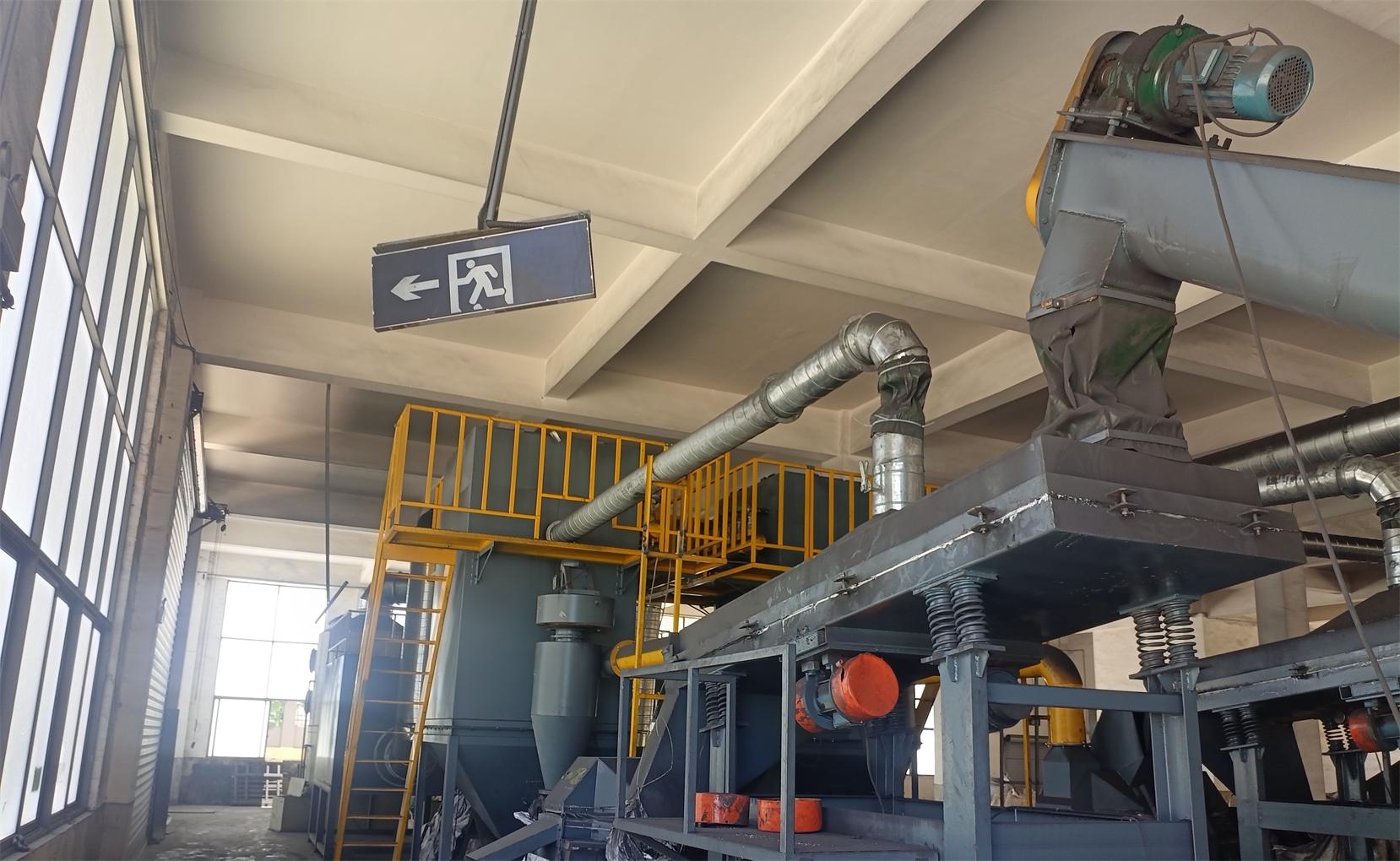
Filters have always been the workhorses of air pollution control, but they had a critical flaw: they got clogged. A circuit board recycling plant processing 500kg/hour might need operators to stop production every 8 hours to replace HEPA filters caked with resin dust. Today's systems solve this with adaptive filtration—filters that adjust their density based on particle size and automatically clean themselves using compressed air pulses or ultrasonic vibrations.
"We used to have two people dedicated just to filter changes," says Maria Gonzalez, plant manager at a Florida circuit board recycling facility using the new compact granulator with dry separator equipment. "Now the system monitors filter pressure in real time. If it detects buildup, it pauses only the affected unit, blasts the filter clean in 90 seconds, and restarts. We haven't had an unplanned shutdown in six months, and our filter costs are down 40%."
3. Bi-Directional Emergency Shutdown Protocols
Emergencies happen—but how a system responds can mean the difference between a minor incident and a disaster. Older air pollution control machines equipment often had one-size-fits-all shutdowns: if a sensor tripped, the entire system turned off, leaving workers in the dark (literally) as they scrambled to fix issues. 2025 systems take a smarter approach: tiered shutdowns that protect both people and processes.
Imagine a refrigerant recycling machine overheating in a mixed-use facility that also runs motor recycling machines equipment. Instead of shutting down the entire plant, the air pollution control system might first isolate the refrigerant unit, activate backup filters, and alert nearby workers via wearable buzzers. If emissions still rise, it triggers a partial shutdown of adjacent equipment (like the motor stator cutter) while keeping critical systems online. And if all else fails? A hard shutdown—but with built-in delays to allow workers to reach safe zones first.
4. Worker-Centric Design: Safety Beyond the Air
Safety isn't just about what's in the air—it's about how the system interacts with the people operating it. New air pollution control system equipment prioritizes ergonomics and comfort, recognizing that a tired or distracted operator is a safety risk.
Consider noise levels: traditional systems could hit 95 decibels—loud enough to cause hearing damage over time. Today's models integrate acoustic dampeners and variable-speed fans that adjust noise based on facility activity. At a Texas plant using motor recycling machines equipment, workers now report 30% less fatigue, and incident reports related to distracted operation have dropped to zero.
Heat is another focus. Systems now include insulated panels and heat-dissipating grilles that keep exterior surfaces cool to the touch, even when processing high-temperature emissions from metal melting furnace equipment. No more burned hands during maintenance checks.
5. Data-Driven Maintenance: Fixing Problems Before They Start
"Why wait for a part to fail?" That's the philosophy behind the predictive maintenance features in 2025 air pollution control systems. By tracking vibration, temperature, and performance data from fans, pumps, and filters, these systems can predict when a component is nearing the end of its lifespan—often weeks before it would cause an issue.
A California facility running cable recycling equipment and scrap cable stripper equipment recently avoided a major breakdown when its air pollution control system flagged a fan bearing showing early signs of wear. "The alert came with a video tutorial on how to replace it and a link to order the part," says maintenance supervisor Raj Patel. "We scheduled the repair during a planned downtime window, and the fan was back up in 2 hours. A year ago, that bearing would have seized, shutting down production for a full day and releasing who knows what into the air."
| Safety Feature | Traditional Air Pollution Control Systems | 2025 Advanced Systems | Real-World Impact |
|---|---|---|---|
| Emission Monitoring | Manual sampling (daily/weekly) | AI-powered real-time sensors (100 samples/second) | 92% reduction in undetected emission spikes at li battery recycling facilities |
| Filter Maintenance | Manual replacement (every 8–12 hours) | Self-cleaning adaptive filters (90-second auto-clean cycles) | 65% fewer production interruptions in circuit board recycling plants |
| Emergency Response | Full-system shutdowns | Tiered, worker-alerted shutdowns with safe evacuation buffers | 40% drop in workplace incidents related to sudden system stops |
| Worker Safety | Basic noise/heat protection | Acoustic dampeners, cool-touch surfaces, ergonomic controls | 30% reduction in reported worker fatigue and injuries |
| Maintenance Alerts | Reactive (breakdown-based) | Predictive (data-driven, weeks in advance) | 70% fewer unplanned downtime hours for cable recycling equipment facilities |
Case Study: GreenTech Li Battery Recycling Plant
From Fines to Recognition: A 12-Month Transformation
GreenTech's Atlanta facility wasn't always a success story. Two years ago, the plant—processing 1,500kg/hour of lithium-ion batteries with li-ion battery breaking and separating equipment—faced $120,000 in EPA fines for excessive volatile organic compound (VOC) emissions. Workers reported headaches and eye irritation; nearby residents complained about strange odors.
Today, after upgrading to a 2025 air pollution control system, the plant has zero violations. Its secret? A three-part approach:
- Multi-layered sensing: Sensors at every stage of the battery breaking process (shredding, separation, drying) feed data to a central AI hub, which adjusts airflow and filtration in real time.
- VOC-specific scrubbers: Customized filters target the unique chemical mix from lithium batteries, neutralizing 99.7% of harmful compounds before they reach the stack.
- Worker feedback loops: Operators can flag issues via a touchscreen interface, and the system uses their input to refine its algorithms—like when workers noticed a pattern in emissions during morning startup, leading the AI to adjust pre-heating cycles.
"We didn't just meet the EPA's standards—we set a new benchmark," says plant director Elena Washington. "Last month, we hosted a tour for local schools. The kids couldn't believe this was a recycling plant—they expected smokestacks, but all they saw was clean air and happy workers. That's the future."
Beyond 2025: The Next Frontier of Safety
As impressive as 2025's advancements are, the journey isn't over. Manufacturers are already testing systems that integrate with facility-wide IoT networks, allowing air pollution control equipment to communicate with li battery recycling equipment and hydraulic press machines equipment in real time. Imagine a scenario where a sudden surge in lithium battery processing automatically triggers the air system to boost filtration—no human input needed.
There's also a push for sustainability within the systems themselves. Next-gen air pollution control machines equipment may use recycled materials in filters and energy-efficient motors that cut power usage by up to 30%. And as facilities expand into new areas—like lithium ore extraction equipment and tailing ore extraction equipment—systems will need to adapt to even more complex pollutant mixes.
But perhaps the most exciting development is the focus on accessibility. Smaller facilities, which often struggle to afford top-tier equipment, are seeing more compact, modular systems designed for operations like lamp recycling equipment and bulb eater equipment. These "plug-and-play" units offer the same predictive safety features as industrial-scale models but at a fraction of the cost.
The Bottom Line: Safety Sells, but It Also Saves
At the end of the day, investing in advanced air pollution control system equipment isn't just about doing the right thing—it's about smart business. Facilities using 2025 systems report lower insurance premiums, fewer regulatory fines, higher worker retention, and stronger community relationships. When a circuit board recycling plant in Oregon upgraded its system, it not only cut emissions but also qualified for a state tax credit, recouping 30% of the investment in the first year.
More than that, these systems are changing the narrative around industrial recycling. They're proving that you can process li battery recycling equipment, circuit board recycling equipment, and scrap metal at scale without sacrificing the air we breathe. In 2025, air pollution control isn't just a line item on a budget—it's a promise: to workers, to communities, and to the planet that progress and protection can go hand in hand.