Picture this: deep inside industrial hubs worldwide, metal melting furnaces roar to life, turning raw ore and scrap metal into liquid gold - quite literally in some cases. But there's a flip side to this elemental transformation. Those belching stacks and energy-hungry operations have become frontline targets in the global fight for cleaner air and a healthier planet.
Over the past decade, a quiet revolution has been unfolding in foundries and metal plants. What was once solely about melting efficiency and production volume now carries equal weight with environmental compliance. As someone who's watched this industry evolve, I've seen firsthand how regulations have reshaped everything from furnace designs to operator training.
The Environmental Protection Agency's Clean Air Act Standards and similar frameworks worldwide have fundamentally changed how we approach metal production. These aren't just bureaucratic hurdles - they're reshaping an entire industry's relationship with the environment.
"The furnace isn't just a tool anymore - it's become a statement about a company's environmental ethics. Operators who used to focus solely on melting points and alloy mixes now juggle emission controls and waste heat recovery as core priorities." - Senior Process Engineer, Global Foundry Group
The Regulatory Landscape
Environmental regulations for metal melting operations aren't a monolith - they're a complex tapestry that varies across regions but shares common threads. Understanding this framework is crucial because it's not static - it's evolving in response to climate science breakthroughs and pollution data.
Clean Air Act Standards (USA)
The backbone of American environmental policy divides metal producers into categories with specific requirements:
- NESHAP (National Emission Standards for Hazardous Air Pollutants) targets heavy metals like mercury, lead, and arsenic
- NSPS (New Source Performance Standards) sets benchmarks for new or modified facilities
- ACT (Alternative Control Techniques) encourages innovative pollution control approaches
What's interesting is how these have created different compliance landscapes for ferrous versus non-ferrous operations.
European Union's Industrial Emissions Directive
Across the Atlantic, the EU takes a different approach with BAT (Best Available Techniques) requirements that push:
- Continuous emission monitoring systems (CEMS)
- Resource efficiency benchmarks
- Whole-facility environmental management
The focus here isn't just on outputs but optimizing the entire melting process to minimize resource use.
Emerging Economies' Evolving Standards
In industrializing nations, we're seeing a fascinating transition:
- China's "Blue Sky" initiatives targeting PM2.5 reductions
- India's National Clean Air Programme with city-specific targets
- Southeast Asia's adoption of modified EU standards
What many don't realize is how these regulations create ripple effects through global supply chains - a factory in Vietnam upgrading its scrap metal melting furnace might be responding to EU customers' sustainability requirements.
Transformations in Furnace Manufacturing
The regulatory wave hasn't just changed how furnaces operate - it's revolutionized how they're designed and built. Walking through a modern furnace factory today feels more like touring a tech startup than a heavy industrial plant.
The Electric Revolution
Where coke-fired cupolas once dominated, we now see electric arc and induction furnaces becoming standard. The numbers tell a compelling story:
- 72% reduction in CO₂ emissions compared to traditional furnaces
- Scrap compatibility increased by 40% with precise temperature control
- Noise pollution cut by 60-80% in factory settings
The regulatory push for cleaner operations has turned what was a niche technology into the industry standard practically overnight.
Closed-Loop Systems
Modern furnace designs now integrate:
- Advanced fume capture hoods with 99% efficiency
- Water cooling systems that recycle up to 95% of process water
- Heat exchangers converting waste heat to power or heating
These aren't just add-ons but integrated features designed into the furnace from the first CAD sketch. Manufacturers report that compliance features now account for 25-40% of design time.
Smart Furnace Technology
The data revolution has hit furnace manufacturing:
- Real-time emissions tracking sensors built into refractories
- AI-powered combustion optimization systems
- Predictive maintenance modules to prevent pollution incidents
One major manufacturer told me they've tripled their software engineering staff while cutting mechanical designers by 15% - a clear sign of where the industry's priorities lie.
The Operating Revolution
Stepping into a modern foundry today is a completely different experience than it was just a decade ago. The smell of ozone from electrical arcs has replaced the sulfurous smell of coke, and the constant hum of pollution control systems provides the background music.
Energy consumption in metal melting has become a three-front war fought simultaneously:
Efficiency Innovations - Today's operators wield tools like:
- Pre-heating systems that cut energy use by 15-20%
- Automated lid closures reducing heat loss by 30%
- Variable frequency drives eliminating idle consumption
Fuel Switching - The gradual but steady shift from coal and coke to:
- Natural gas with low-NOx burners
- Biofuels from industrial waste streams
- Hydrogen pilot programs (still experimental but promising)
Carbon Accounting - The unseen revolution where every kWh gets tracked and assigned an emissions value. Furnace operators now manage carbon budgets with the same intensity they once managed metal inventories.
"We don't just melt metal anymore - we manage molecules. Every gram of pollution avoided represents not just regulatory compliance, but real health benefits for our community." - Foundry Operations Manager, Ohio
The contemporary melting facility has become a fortress against airborne pollutants:
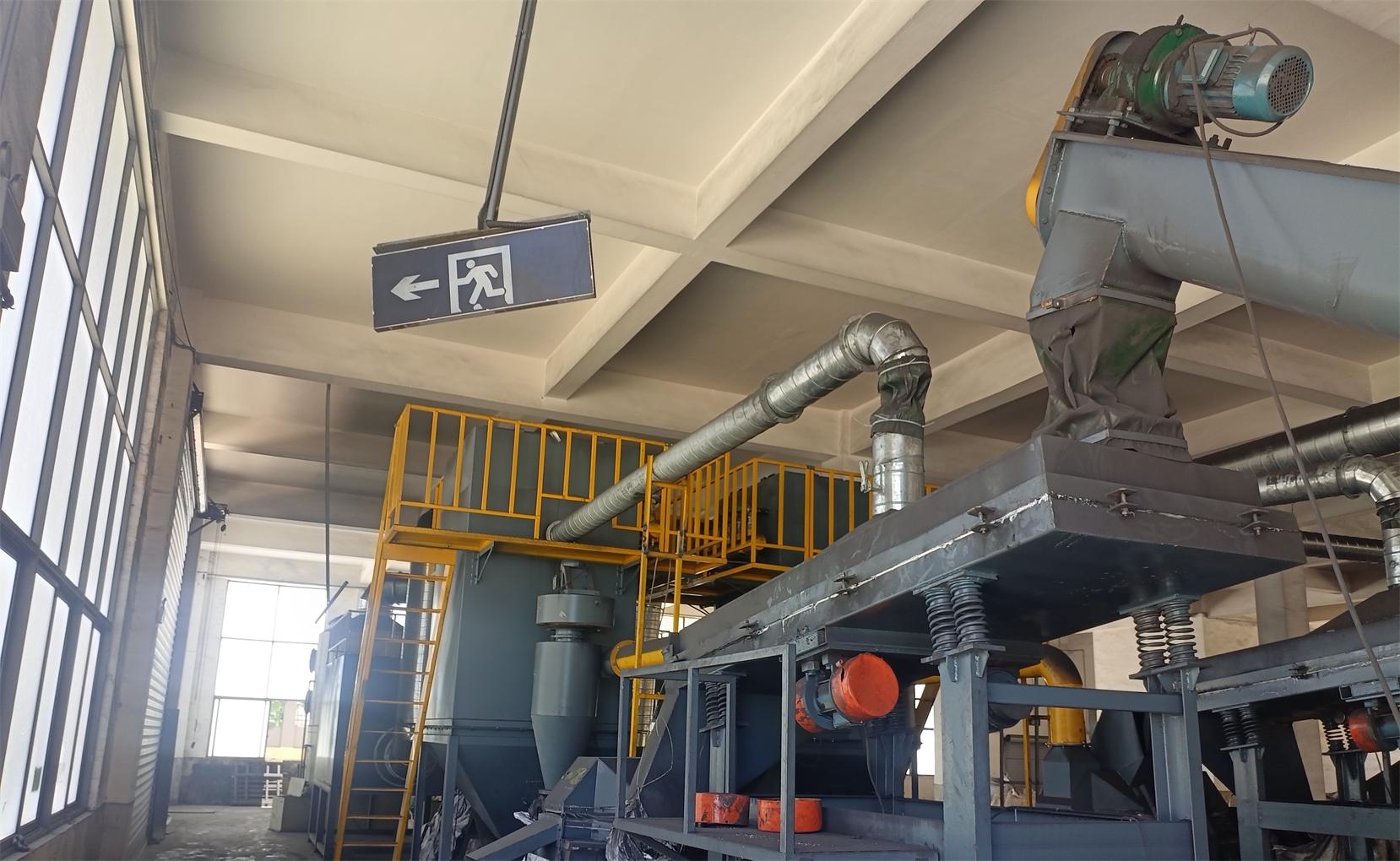
Particulate Capture Systems have evolved from simple baghouses to sophisticated multi-stage systems combining:
- Cyclone pre-cleaners capturing larger particles
- Electrostatic precipitators removing fine particulates
- Wet scrubbers capturing sub-micron particles
Modern systems achieve capture rates above 99.97% - transforming what was black smoke into almost invisible emissions.
Gas Treatment addresses invisible threats with technologies like:
- Selective catalytic reduction (SCR) systems for NOx control
- Adsorption systems using activated carbon for mercury removal
- Acid gas scrubbers neutralizing SO₂ and HCl
The most advanced facilities now treat exhaust gases to cleaner standards than ambient air in many cities.
Case Studies: Global Perspectives
Aluminum Producer – Norway
Facing Europe's strictest emission regulations, Hydro Aluminium transformed their operations:
- Replaced six coal-fired furnaces with two electric hybrid units
- Implemented proprietary alumina scrubbing technology
- Achieved 96% reduction in fluoride emissions
- Cut CO₂ emissions by 1.2 million tons annually
Their unexpected benefit? Energy consumption per ton dropped 18% through precise temperature controls unavailable in their old furnaces.
Steel Foundry – India
Operating under India's new National Clean Air Programme:
- Installed semi-dry scrubber systems adapted to high-dust environment
- Converted to agricultural waste briquettes instead of coal
- Developed water misting systems to control dust during scrap handling
- Reduced PM2.5 emissions by 87% while cutting fuel costs 25%
The real victory? Community acceptance replaced neighbor complaints with local pride.
Copper Recycler – USA
Complying with strict EPA NESHAP standards for secondary copper operations:
- Implemented advanced baghouse with PTFE membranes
- Added carbon injection system for dioxin control
- Installed comprehensive fugitive emission controls
- Achieved 99.9% capture of lead and arsenic emissions
Their regulatory compliance became a marketing advantage when securing automotive industry contracts with strict material purity requirements.
Future Horizons
Standing at this crossroads between heavy industry and environmental responsibility, I see several emerging trends that will redefine metal melting operations in the coming decade:
Hydrogen-Based Melting
Still in its infancy but showing remarkable promise:
- Pilot projects achieving near-zero CO₂ emissions
- Challenges around hydrogen embrittlement being addressed
- Major European producers targeting 2030 for commercial rollout
The race is on between burner retrofits and purpose-built hydrogen furnaces.
AI and Machine Learning Optimization
Beyond current automation lies true predictive intelligence:
- Self-regulating combustion systems responding to material composition
- Predictive pollution models preventing excursions before they occur
- Automated regulatory reporting built directly into furnace controls
The next generation of operators will need different skills - less manual control, more data science literacy.
Material-Specific Furnace Designs
We're seeing emergence of specialized units optimized for:
- High-aluminum content scrap requiring different combustion profiles
- Low-melting-point alloys using induction instead of arc
- Super-clean operations for aerospace and medical applications
The one-size-fits-all furnace is disappearing in favor of application-specific tools.
Balancing Progress and Planet
The story of metal melting furnaces in the 21st century isn't just about metals – it's about reinvention. What I've witnessed across global foundries has shown me that environmental regulations, far from being constraints, have become catalysts for innovation that often pay unexpected dividends.
The furnace operators who used to measure success purely in tons poured now track a dashboard of metrics: grams of emissions per ton, percentage of waste heat recovered, kilowatt-hours conserved. And surprisingly, this holistic approach frequently leads to better metallurgy, longer furnace life, and reduced operating costs.
The journey hasn't been simple, nor is it complete. Global standards continue to evolve, with policies like the new EU Carbon Border Adjustment Mechanism creating ripples in international trade patterns. Recycling infrastructure development lags behind industrial capacity in many regions. And breakthrough technologies like hydrogen melting face significant implementation hurdles.
Yet what emerges from this complex landscape is a clear direction of travel: the metal industry's necessary transition toward true sustainability. The furnaces of tomorrow won't just melt metal – they'll be integrated environmental management systems where every joule of energy and every molecule of emission counts. This transformation positions the industry not as a pollution source to be regulated, but as an essential partner in building a sustainable industrial future.