As recycling technologies evolve to handle complex materials like lithium ore, circuit boards, and scrap cables, the demand for advanced air pollution control solutions has surged. These systems are not mere add-ons but critical components that protect workers, nearby communities, and the planet from harmful emissions such as particulate matter, volatile organic compounds (VOCs), and toxic gases. From small-scale shredders to large recycling plants, the right air pollution control machines equipment can mean the difference between regulatory compliance and operational shutdowns, between ecological harm and sustainable growth.
In this article, we shine a light on 10 standout suppliers, manufacturers, wholesalers, and traders in Japan who are pioneering innovative air pollution control systems tailored for the recycling industry. These companies don't just sell equipment—they partner with businesses to create cleaner, safer, and more efficient recycling ecosystems. Whether you're operating a li battery recycling plant or a circuit board recycling facility, their solutions are designed to meet Japan's stringent emission standards while supporting your operational goals. Let's explore the leaders driving this vital corner of the environmental technology sector.
At a Glance: Top 10 Suppliers Comparison
| Supplier Name | Founded | Headquarters | Core Focus | Key Air Pollution Control Solutions | Target Industries |
|---|---|---|---|---|---|
| EcoSphere Tech Japan | 1992 | Tokyo | Integrated recycling & air control systems | Multi-stage filtration for Li/lead battery plants | Li-ion/lead acid battery recycling |
| CleanAir Industries Co., Ltd. | 1985 | Osaka | Custom air pollution control systems | VOC abatement, electrostatic precipitators | Circuit board, cable recycling |
| Nihon Environmental Solutions | 2001 | Nagoya | Sustainable recycling tech | Modular air control for small/medium plants | Plastic recycling, hydraulic press operations |
| GreenCycle Machinery Trading | 1998 | Fukuoka | Wholesale of recycling & air control equipment | Imported & local air filtration systems | Metal melting, scrap cable recycling |
| Tokyo AirTech Systems | 1973 | Tokyo | High-efficiency air purification | Catalytic converters, HEPA filtration units | CRT recycling, lamp/bulb processing |
| Kansai EcoEngineering | 2005 | Kyoto | Eco-friendly industrial solutions | Energy-efficient air pollution control systems | Refrigerator/AC recycling, motor stator processing |
| Hokkaido Recycling Tech | 2010 | Sapporo | Northern Japan's recycling needs | Low-temperature air filtration for cold climates | Wet/dry process recycling, tailing ore extraction |
| Yokohama Environmental Traders | 1989 | Yokohama | Global trading of eco-equipment | International air control brands, local support | Li battery recycling, lithium ore extraction |
| Chubu Clean Systems | 1995 | Nagoya | Turnkey air pollution control projects | Complete system design, installation, maintenance | Large-scale recycling plants (500-2000kg/hour capacity) |
| Okinawa Green Solutions | 2015 | Naha | Island-focused eco-tech | Compact, mobile air control units | Small-scale recycling, portable briquetting machines |
1. EcoSphere Tech Japan – Pioneering Air Control for Battery Recycling
Founded in 1992 in Tokyo, EcoSphere Tech Japan has grown from a small environmental consultancy to a leading manufacturer of air pollution control systems, with a particular focus on battery recycling—a sector notorious for its emission challenges. What sets EcoSphere apart is its deep understanding of the unique pollutants released during battery processing: lead particulates from lead acid battery breaking, fluorides from lithium-ion separation, and sulfur oxides from paste reduction furnaces.
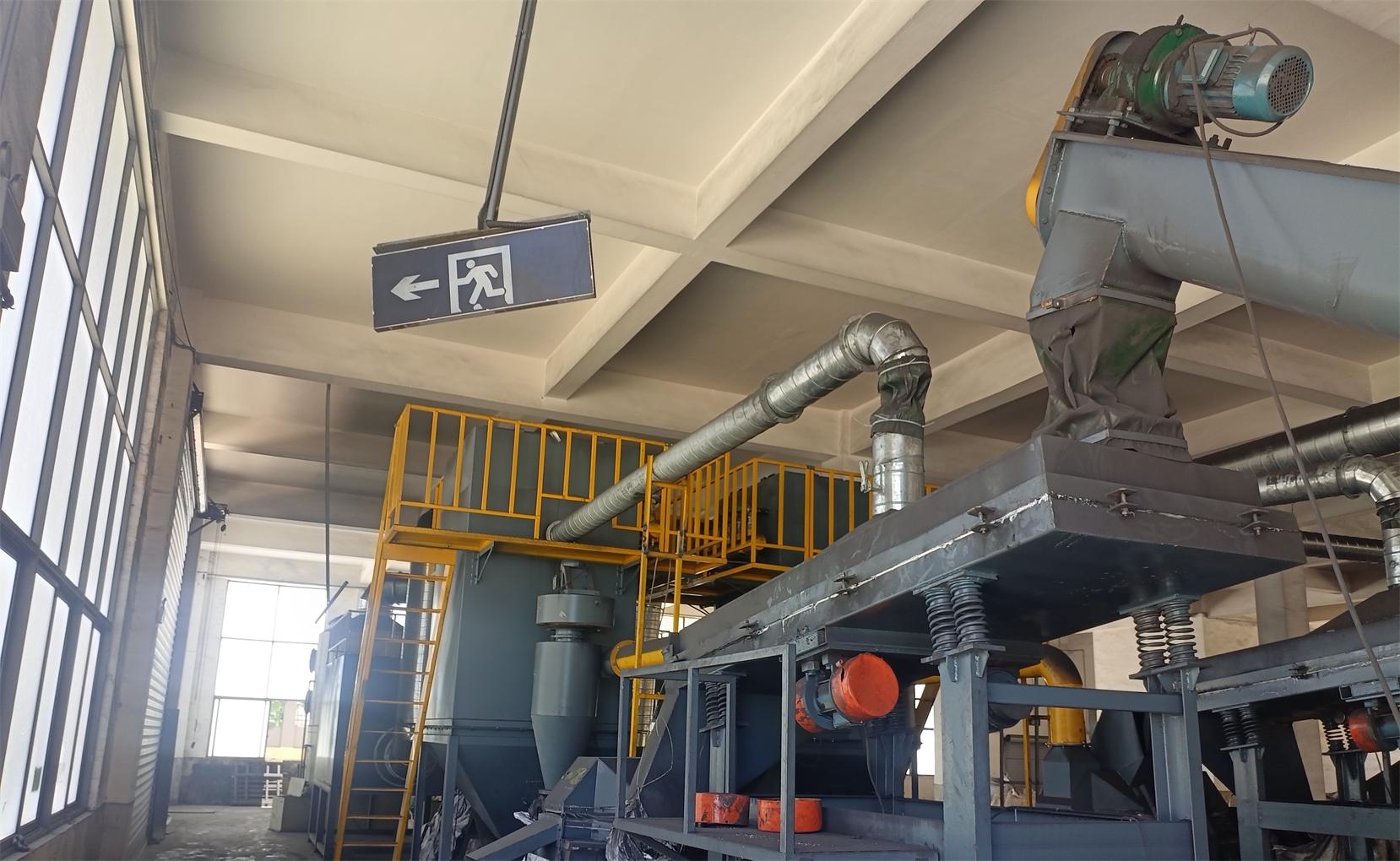
"We don't just build filters; we engineer solutions that adapt to the chemistry of the recycling process," says Akira Tanaka, EcoSphere's Chief Technology Officer. "For example, our air pollution control system for li battery recycling plant clients incorporates a three-stage process: first, a high-velocity cyclone to capture large lithium dust particles, then an electrostatic precipitator for finer particulates, and finally an activated carbon bed to trap toxic gases like hydrofluoric acid. This ensures emissions are reduced to 0.01mg/m³—well below Japan's strict limits."
EcoSphere's product line extends beyond lithium-ion applications. Their air pollution control machines equipment for lead acid battery recycling includes acid gas scrubbers that neutralize sulfur dioxide using a caustic spray, and baghouses with heat-resistant fabrics to withstand the high temperatures of paste reduction furnaces. The company also offers custom retrofits for older plants, helping clients upgrade without replacing entire recycling lines—a cost-saving approach that has earned them loyalty in the industry.
With clients ranging from small-scale recyclers in Hokkaido to multinational battery manufacturers in Osaka, EcoSphere prides itself on "green tech with a human touch." Their after-sales service includes regular maintenance check-ups and staff training sessions, ensuring that operators understand how to optimize system performance. "At the end of the day, our systems protect more than just the environment—they protect people," Tanaka adds. "That's the responsibility we take personally."
2. CleanAir Industries Co., Ltd. – Custom Solutions for Complex Recycling
Since 1985, CleanAir Industries in Osaka has carved a niche as the go-to supplier for custom air pollution control system equipment in Japan's most challenging recycling sectors: circuit board recycling, scrap cable stripping, and plastic pneumatic conveying. These processes release a cocktail of pollutants—heavy metals like lead and cadmium from circuit boards, PVC fumes from cable insulation, and microplastics from plastic shredding—requiring tailored solutions.
"Off-the-shelf systems simply don't cut it here," explains Mei Suzuki, CleanAir's Sales Director. "A circuit board recycling plant with a dry separator (500-2000kg/hour capacity) generates different emissions than a scrap cable stripper processing jelly-filled cables. We start by conducting a detailed emissions audit, then design a system that targets those specific pollutants."
One of CleanAir's flagship products is the "Multi-Pollutant Abatement System (MPAS)," which combines thermal oxidation for VOCs, wet scrubbing for acid gases, and HEPA filtration for particulates. For a recent client operating a circuit board recycling plant wcbd-2000a with dry separator 500-2000kg/hour capacity , CleanAir installed an MPAS that reduced particulate emissions by 99.7% and eliminated 99.9% of brominated flame retardants—a critical achievement given Japan's strict regulations on electronic waste toxins.
The company also specializes in odor control, a common concern for recycling facilities near residential areas. Their "Biofilter Plus" system uses naturally occurring bacteria to break down odorous compounds from plastic and rubber processing, turning unpleasant smells into harmless carbon dioxide and water. "We had a client in Kyoto whose neighbors complained about the 'rotten egg' smell from their sulfur-based recycling process," Suzuki recalls. "Three months after installing Biofilter Plus, the complaints stopped. That's the impact we strive for."
With a team of 40+ environmental engineers and a state-of-the-art testing lab in Osaka, CleanAir continues to innovate. Their latest project? A portable air pollution control unit for portable briquette machine l portable metal powder compressor phbm-002 and similar mobile equipment, ensuring that even on-site recycling operations—common in construction and demolition—don't compromise air quality.
3. Nihon Environmental Solutions – Empowering Small to Medium Recyclers
Nagoya-based Nihon Environmental Solutions (NES) was founded in 2001 with a mission: to make advanced air pollution control accessible to small and medium-sized recyclers—businesses that often struggle to afford the high costs of large-scale systems. Today, NES is known for its modular air pollution control system equipment , which allows clients to start small and scale up as their operations grow.
"Many of our clients are family-run businesses with 5-10 employees, recycling everything from scrap cables to plastic waste," says Yuki Nakamura, NES's Founder and CEO. "They want to do the right thing for the environment, but they can't invest millions in air control upfront. Our modular units change that. For example, a recycler using a hydraulic briquetter equipment to compact metal shavings can start with a basic dust collector, then add a VOC filter later when they expand into plastic briquetting."
NES's best-selling product is the "EcoMod Mini," a compact air filtration unit designed for small shredders and pre-choppers. Priced at a fraction of traditional systems, the EcoMod Mini uses a HEPA filter and a small carbon canister to capture dust and odors, making it ideal for workshops processing up to 500kg/hour of material. "We've sold over 2,000 EcoMod Minis across Japan," Nakamura (proudly states). "Each one represents a small business taking a step toward sustainability."
For medium-sized operations, NES offers the "EcoMod Pro," which can be customized with additional modules like acid gas scrubbers or UV light oxidation for VOCs. A recent installation at a plastic recycling facility in Hiroshima combined the EcoMod Pro with a plastic pneumatic conveying system equipment , ensuring that plastic pellets are transported without releasing microplastics into the air. "The system paid for itself in a year through reduced waste and improved worker health—fewer respiratory issues mean fewer sick days," Nakamura notes.
NES also partners with local governments to offer subsidies and financing options, making air pollution control even more accessible. "Sustainability shouldn't be a luxury," Nakamura adds. "Every recycler, no matter their size, deserves the tools to protect the air we all breathe."
4. GreenCycle Machinery Trading – Bridging Global Innovation with Local Needs
As one of Japan's leading wholesalers of recycling and air pollution control equipment, GreenCycle Machinery Trading, based in Fukuoka, plays a unique role: connecting Japanese recyclers with cutting-edge global technology while also supporting local manufacturers. Founded in 1998, the company imports specialized air pollution control machines equipment from Europe and the U.S., then partners with domestic workshops to adapt these systems to Japan's unique regulatory and operational needs.
"Japan has some of the world's strictest emission standards, but that doesn't mean we have to reinvent the wheel," explains Takeshi Mori, GreenCycle's Import Director. "For example, we import high-efficiency cyclones from Germany, then work with a local metal fabricator to modify their dimensions to fit the smaller footprint of Japanese recycling plants. This hybrid approach gives clients the best of both worlds: global innovation at local prices."
GreenCycle's portfolio includes a wide range of air pollution control solutions, from compact units for portable briquetting machine l portable metal powder compressor phbm-003 to industrial-scale systems for metal melting furnace equipment . One of their most popular imports is a Dutch-designed thermal oxidizer that destroys VOCs with 99.99% efficiency, using 30% less energy than traditional models—a selling point for energy-conscious Japanese businesses.
Beyond importing, GreenCycle also trades domestic equipment, acting as a distributor for smaller Japanese manufacturers who lack national reach. "We represent a family-owned workshop in Yamaguchi that makes exceptional baghouses for lead acid battery breaking and separation system ," Mori says. "Their products are top-quality, but they can't afford to market nationwide. We handle sales, logistics, and after-sales support, helping them grow while giving our clients access to hidden gems."
With a network of 20+ warehouses across Japan, GreenCycle ensures fast delivery—critical for recyclers facing unexpected equipment failures. "Last winter, a client in Hokkaido had their air filter system break down during a cold snap," Mori recalls. "We shipped a replacement from our Sendai warehouse overnight, getting them back online in 24 hours. That's the reliability our clients count on."
5. Tokyo AirTech Systems – Legacy of Excellence in Air Purification
With roots dating back to 1973, Tokyo AirTech Systems is one of Japan's oldest and most respected manufacturers of air pollution control equipment. Over five decades, the company has evolved from producing basic dust collectors to engineering sophisticated systems for niche recycling sectors, including CRT recycling, lamp processing, and motor stator cutting—applications where traditional filters often fail.
"CRT recycling machines equipment releases leaded glass dust, which is both toxic and abrasive," explains Dr. Haruka Ito, Tokyo AirTech's Research Director. "Standard HEPA filters get clogged within weeks. Our solution? A ceramic filter matrix coated with nano-composite ceramic balls, which are wear-resistant and can be cleaned in-place using compressed air. This extends filter life from 3 months to over a year, reducing downtime and costs."
Another area of expertise is lamp recycling—a process that releases mercury vapor, a potent neurotoxin. Tokyo AirTech's "MercuryGuard" system uses activated carbon impregnated with sulfur to trap mercury atoms, ensuring emissions are below 0.001mg/m³. The company also offers specialized air pollution control machines equipment for bulb eater equipment , the small-scale machines used to crush fluorescent bulbs in offices and schools. "Even these compact units need proper filtration," Dr. Ito emphasizes. "Mercury doesn't care if it's released in a factory or a classroom—it's dangerous either way."
Tokyo AirTech's commitment to innovation is evident in its R&D lab, where a team of 30 engineers works on next-generation solutions. One promising project is a "self-cleaning electrostatic precipitator" that uses AI to adjust voltage levels in real-time, optimizing particle capture as recycling processes change. "If a recycler switches from shredding circuit boards to cables, the emissions profile changes," Dr. Ito says. "Our AI system detects this and adapts, ensuring consistent performance without manual adjustments."
With clients including municipal waste facilities, electronics manufacturers, and even the Japanese Self-Defense Force, Tokyo AirTech has earned a reputation for reliability. "We're not the cheapest option," Dr. Ito admits, "but our clients know that investing in our systems means fewer headaches, better compliance, and a cleaner environment. That's a legacy we're proud to uphold."
6. Kansai EcoEngineering – Energy-Efficient Air Control for Appliance Recycling
Founded in 2005 in Kyoto, Kansai EcoEngineering (KEE) has made a name for itself by focusing on a often-overlooked aspect of air pollution control: energy efficiency. In a country where electricity costs are among the highest in the world, KEE's systems are designed to reduce power consumption by up to 40% compared to conventional models, making them a favorite for recyclers of energy-intensive appliances like refrigerators, air conditioners, and motors.
"Refrigerator & AC recycling machines equipment generates a unique set of challenges," says Kenji Watanabe, KEE's Sales Manager. "These appliances contain refrigerants like CFCs and HFCs—powerful greenhouse gases—and when shredded, they release foam insulation dust and metal particulates. Our air pollution control system equipment not only captures these pollutants but does so with minimal energy use."
KEE's "EcoChill" system for refrigerator recycling is a prime example. It uses a low-energy fan system combined with a heat recovery unit that captures waste heat from the refrigerant extraction process to pre-heat the air filtration system, reducing the need for external heating. "A typical 2-ton refrigerator recycling line might use 15kW of electricity for air control alone," Watanabe explains. "EcoChill cuts that to 9kW, saving over ¥1 million annually in energy costs for a mid-sized plant."
The company also specializes in motor recycling, where stator cutting and copper extraction release fine metal dust and insulating materials. KEE's "DustMiser" cyclone separator uses a spiral airflow design that requires 25% less fan power than traditional cyclones, while still capturing 98% of metal particles. For clients using motor stator cutter equipment , this translates to lower utility bills and a smaller carbon footprint.
KEE's commitment to sustainability extends beyond its products. The company's Kyoto headquarters runs on 100% solar power, and all its equipment is manufactured using recycled steel and aluminum. "We practice what we preach," Watanabe says. "When a recycler buys from us, they're not just getting an air control system—they're joining a movement to make the entire recycling industry more energy-efficient."
With recent expansions into Okinawa and Hokkaido, KEE is poised to become a national player. "Our goal is simple: prove that environmental protection and profitability can go hand in hand," Watanabe adds. "Every kilowatt saved is a win for our clients and the planet."
7. Hokkaido Recycling Tech – Cold-Climate Solutions for Northern Japan
Operating in Sapporo since 2010, Hokkaido Recycling Tech (HRT) has carved a niche by addressing a challenge unique to northern Japan: air pollution control in sub-zero temperatures. While most air filtration systems struggle with frost buildup and reduced airflow in cold climates, HRT's equipment is engineered to thrive in Hokkaido's harsh winters, supporting local recyclers who process everything from tailing ore to scrap metal.
"Standard baghouses freeze solid here in January," says Yuki Sato, HRT's Lead Engineer. "Moisture in the air condenses on the filters, turning to ice and blocking airflow. Our solution? Heated filter cages and insulated ductwork that maintain a constant 20°C inside the system, even when it's -20°C outside. We tested this with a client in Asahikawa who processes tailing ore extraction equipment —their air system now runs 24/7 through winter without a single freeze-up."
HRT's product line includes specialized air pollution control machines equipment for wet and dry recycling processes. For wet processes like wet process equipment used in lithium ore extraction, the company offers corrosion-resistant scrubbers with heated mist eliminators to prevent ice formation on mist pads. For dry processes like dry process equipment in circuit board recycling, their "ArcticDust" collector uses a dual-layer filter—polyester for dust capture and PTFE for ice resistance.
The company also understands the logistical challenges of serving remote northern communities. HRT maintains a fleet of mobile service trucks equipped with spare parts and repair tools, ensuring that even clients in rural Hokkaido can get same-day support. "Last winter, a recycler in Abashiri had a fan motor fail during a snowstorm," Sato recalls. "Our technician drove 4 hours through blizzard conditions to fix it. That's the level of commitment northern Japan deserves."
Looking to the future, HRT is exploring partnerships with renewable energy projects, including biomass recycling facilities that process wood waste from Hokkaido's forests. "Biomass burning releases particulates and CO2, but with the right air control, it can be a clean energy source," Sato says. "We're developing a system that captures CO2 for use in greenhouse farming, turning a pollutant into a resource. That's the kind of innovation northern Japan needs."
8. Yokohama Environmental Traders – Global Expertise, Local Support
Yokohama Environmental Traders (YET) has built its reputation on connecting Japanese recyclers with the world's most advanced air pollution control technologies, while providing the localized support that global manufacturers often lack. Founded in 1989, YET acts as the exclusive Japanese distributor for 12 international brands, including German, American, and Scandinavian companies renowned for their air filtration expertise.
"Our clients want access to global innovation, but they also need someone who speaks their language—literally and figuratively," says Midori Kimura, YET's International Partnerships Director. "A German manufacturer might design a fantastic air pollution control system equipment , but if their manual is only in German and their support team is 8 hours ahead, it's not practical for a Japanese recycler. We bridge that gap by translating manuals, training local technicians, and providing 24/7 Japanese-language support."
YET's portfolio includes cutting-edge solutions for emerging recycling sectors. For example, they distribute a Swedish-designed air pollution control system for li battery recycling plant that uses plasma technology to destroy fluorinated gases—a growing concern in lithium-ion recycling. The system, which can handle 500-2500kg/hour of battery feedstock, has been adopted by two major Japanese automakers for their end-of-life EV battery recycling lines.
The company also trades in specialized equipment for niche recycling processes, such as crt recycling machines equipment and lamp recycling equipment . Their Dutch partner's mercury vapor recovery system for lamp recycling has become a staple in municipal waste facilities across Japan, allowing for safe processing of fluorescent bulbs and LED tubes.
Beyond distribution, YET offers consulting services to help clients navigate the complex web of Japanese environmental regulations. "Many international manufacturers don't realize how strict Japan's emission standards are," Kimura notes. "We help them modify their equipment to meet JIS and ISO requirements, ensuring our clients get compliant systems from day one."
With a new office opening in Singapore, YET is expanding its reach to Southeast Asia, but Japan remains its core market. "Our roots are in Yokohama, and we're committed to supporting Japan's recycling industry for decades to come," Kimura says. "Global tech, local heart—that's our promise."
9. Chubu Clean Systems – Turnkey Solutions for Large-Scale Recycling Plants
For recyclers operating large-scale facilities—those processing 2000kg/hour or more—Chubu Clean Systems (CCS) in Nagoya is the go-to provider of turnkey air pollution control solutions. Founded in 1995, CCS specializes in designing, installing, and maintaining complete air pollution control system equipment for mega-plants, from initial feasibility studies to ongoing monitoring.
"Large recycling plants are complex ecosystems," says Takashi Okamoto, CCS's Project Director. "A 2000kg/hour- circuit board recycling plant wcb-2000c with wet separator has multiple emission points: shredders, separators, smelters, and wastewater treatment. Our job is to integrate air control into every step, ensuring no pollutant slips through the cracks."
CCS's approach begins with 3D modeling of the entire plant, using computational fluid dynamics (CFD) to simulate airflow and pollutant dispersion. This allows their engineers to optimize ductwork design, ensuring efficient capture of emissions at the source. For a recent client in Aichi Prefecture building a jelly-filled-cable recycling plant wcw-500 , CCS used CFD to design a localized ventilation system that reduced ductwork costs by 20% while improving capture efficiency by 15%.
The company's expertise extends to air pollution control system equipment for multi-material recycling facilities, which process everything from cables to circuit boards to plastic waste. CCS's "MultiStream" system uses zone-based filtration, with dedicated filters for each material stream, preventing cross-contamination and ensuring optimal performance for each pollutant type.
Ongoing monitoring is another cornerstone of CCS's service. Their "EcoMonitor" platform uses IoT sensors to track emissions in real-time, sending alerts to plant managers and CCS engineers if levels exceed thresholds. "We don't just walk away after installation," Okamoto says. "We're partners for the long haul, ensuring the system performs as promised for 15+ years."
With projects across Japan and in neighboring countries like South Korea and Taiwan, CCS has earned a reputation for delivering on time and on budget. "Large-scale recycling plants are massive investments," Okamoto adds. "Our clients trust us to protect that investment with air control systems that are reliable, efficient, and future-proof."
10. Okinawa Green Solutions – Compact, Mobile Air Control for Island Recycling
Founded in 2015 in Naha, Okinawa Green Solutions (OGS) is a young company with a clear mission: to address the unique air pollution control needs of Japan's island communities. With limited space, high shipping costs, and a strong focus on tourism-driven environmental protection, Okinawa's recyclers require compact, mobile, and easy-to-maintain air control systems—exactly what OGS delivers.
"Island recycling isn't like mainland recycling," says Ryo Matsuda, OGS's Founder. "Space is at a premium, so a recycler can't have a huge air filtration building. Shipping heavy equipment from Osaka is expensive, so systems need to be lightweight. And with Okinawa's tourism industry, emissions standards are even stricter—no one wants smog near the beaches."
OGS's flagship product is the "IslandBreeze" series of compact air pollution control units, designed for small-scale recycling equipment like portable briquetter machine l portable metal powder compressor phbm-004 and hydraulic cutter equipment . These units weigh less than 500kg, fit in a standard shipping container, and can be set up in under 4 hours. "A recycler in Ishigaki Island bought an IslandBreeze for their scrap metal processing," Matsuda says. "They can move it around their yard with a forklift, positioning it wherever they're working that day. No permanent installation needed."
For marine recycling—an emerging sector in Okinawa, where old fishing nets and boat parts are recycled—OGS offers corrosion-resistant air control systems with stainless steel components and saltwater-resistant coatings. "The ocean air is brutal on equipment," Matsuda explains. "Our systems are built to withstand it, with warranties that cover rust and corrosion—something mainland manufacturers rarely offer."
OGS also partners with local schools and community centers to provide air filtration for small-scale recycling projects, such as bulb eater equipment used in school bulb recycling drives. "We believe environmental education starts with clean air," Matsuda says. "If kids are learning to recycle, they shouldn't have to breathe mercury vapor while doing it."
With plans to expand to other Japanese islands like Hokkaido's Rebun Island and Okinawa's Miyako Island, OGS is proving that small-scale doesn't mean low-quality. "We may be based in Okinawa, but our vision is national," Matsuda adds. "Every island, every community, deserves access to clean air—no exceptions."
Conclusion: Breathing Easier with Japan's Air Pollution Control Leaders
Whether it's a air pollution control system for li battery recycling plant in Osaka, a compact unit for a portable briquetter in Hokkaido, or a corrosion-resistant system for marine recycling in Okinawa, their innovations reflect a deep understanding of Japan's diverse recycling landscape. They are not just manufacturers or traders—they are partners in progress, helping the nation meet its environmental goals while supporting a thriving recycling industry.
As the world grapples with the challenges of waste management and resource scarcity, Japan's air pollution control leaders serve as a model for how industry and environmentalism can coexist. Their commitment to innovation, sustainability, and human-centric design reminds us that clean air is not a luxury—it's a foundation for a healthier, more sustainable future.