Norway's commitment to sustainability runs deeper than its fjords and forests—it's woven into the fabric of its industries. With some of Europe's strictest environmental laws, businesses here don't just aim for compliance; they strive to set new standards for clean, responsible operations. Nowhere is this more critical than in recycling and waste management, where processes like breaking down batteries, shredding circuit boards, or melting metals can release harmful pollutants if not properly controlled. That's where air pollution control system equipment becomes the unsung hero: protecting workers, neighborhoods, and Norway's pristine ecosystems while keeping recycling operations efficient and profitable.
Whether you're running a lead acid battery recycling plant, processing lithium-ion batteries, or handling scrap cables, the right air pollution control partner can turn a compliance headache into a competitive advantage. Today, we're spotlighting the top 10 suppliers in Norway that excel at blending cutting-edge technology with a genuine passion for sustainability. These aren't just vendors—they're collaborators in Norway's green transition, ensuring that progress and planet go hand in hand.
1. Nordic EcoTech Solutions
Walk into Nordic EcoTech's Oslo headquarters, and you'll immediately sense their mission: "Clean air isn't a luxury—it's the foundation of every responsible business." For nearly two decades, this family-led firm has been the backbone of Norway's air pollution control sector, particularly renowned for integrating their systems with lead acid battery recycling equipment. "Battery recycling is a high-stakes game," says CEO Lars Hansen, gesturing to a prototype of their latest air filtration unit. "The fumes from breaking and melting contain heavy metals and sulfur compounds. Our job is to capture them before they escape—for the workers, for the community, for the fjords we all love."
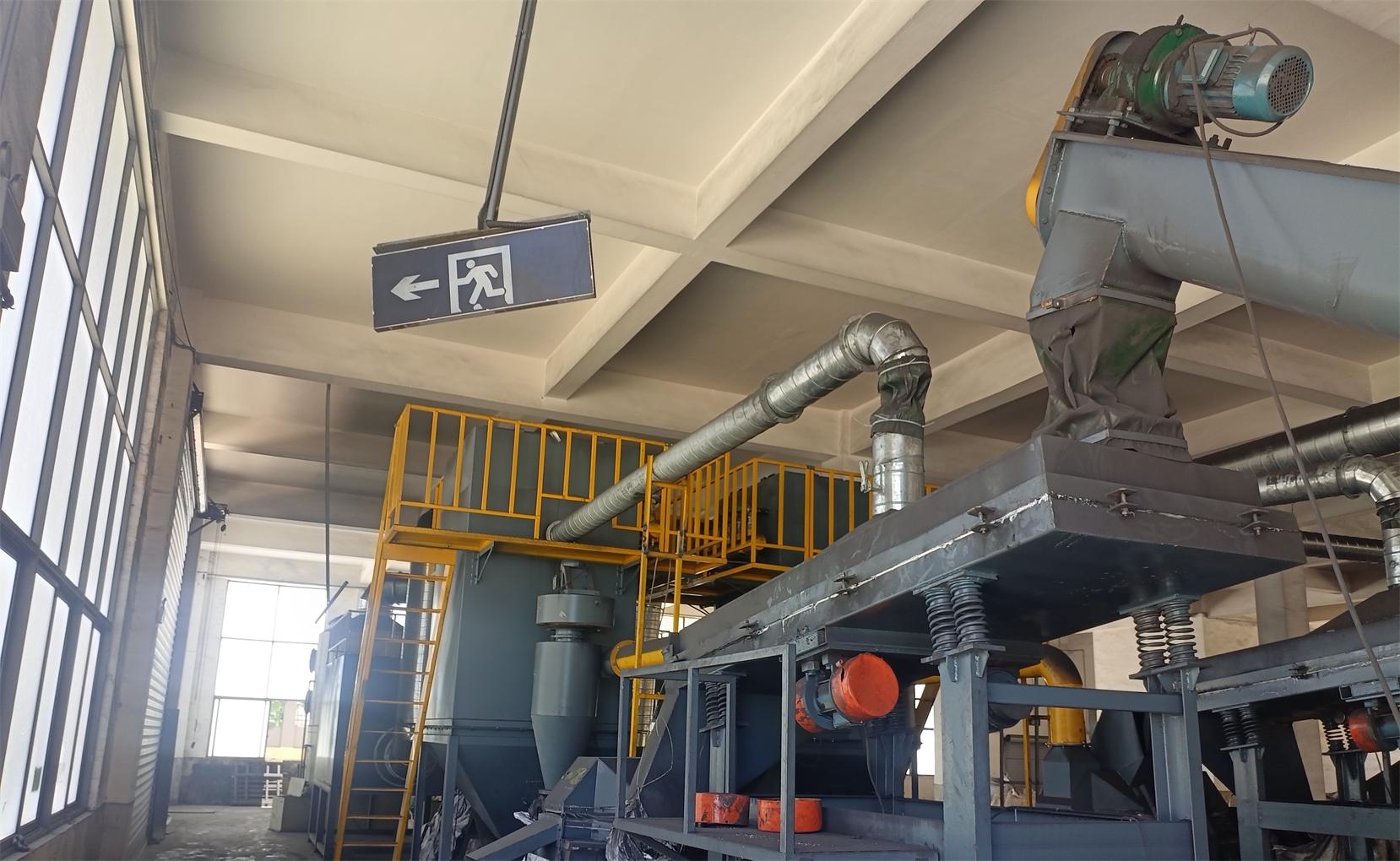
What makes Nordic EcoTech stand out? Their APCS-7000 system, a multi-stage filtration powerhouse designed specifically for lead acid battery recycling plants. It starts with a cyclone separator to catch large particulates, followed by a baghouse filter lined with nano composite ceramic balls (a proprietary technology that boosts adsorption efficiency by 30%). Finally, a catalytic converter neutralizes toxic gases like sulfur dioxide. "We tested this on a client's 500kg/hour lead battery line in Bergen last year," Lars recalls. "Their emissions dropped to 0.002mg/m³—well below Norway's already strict 0.01mg/m³ limit. The workers even noticed the difference—fewer headaches, better air quality in the shop."
Beyond technology, Nordic EcoTech prides itself on partnership. They don't just sell you a system; they send engineers to your site for a full process audit, design a custom solution, and offer 24/7 support for the first five years. "Sustainability isn't a one-time project," Lars says. "It's a journey we walk with our clients."
2. Oslo Air Control Systems
Oslo Air Control Systems (OACS) has earned its reputation as the "go-to" for lithium-ion battery recyclers—a sector exploding in growth as Norway leads Europe in electric vehicle adoption. "Li-ion batteries are energy-dense wonders, but recycling them releases hydrogen fluoride and volatile organic compounds (VOCs) that are tough to contain," explains technical director Ingrid Nilsen, holding up a sample of their specialized filter media. "Our systems don't just trap these pollutants—they neutralize them."
OACS's Li-Clean 5000 system is a game-changer for facilities processing 500kg to 2500kg of lithium batteries hourly. It combines a dry scrubber with activated alumina to absorb hydrogen fluoride, followed by a UV photocatalytic oxidizer that breaks down VOCs into harmless CO₂ and water. "We recently installed this at a major EV battery recycler outside Trondheim," Ingrid says. "Their old system struggled with downtime; ours has run continuously for six months, with filter changes only every 90 days. And the best part? They're now recovering 99.5% of the lithium, cobalt, and nickel from the batteries—clean air and higher yields? That's the Nordic way."
What truly sets OACS apart is their focus on adaptability. Many clients use their systems alongside dry process equipment like shredders and separators, so OACS designs units that fit seamlessly into existing workflows. "We don't make you redesign your plant for our equipment," Ingrid adds. "We build our equipment around your needs."
3. Bergen Recycling Technologies
Nestled between Bergen's mountains and fjords, Bergen Recycling Technologies (BRT) has become a leader in circuit board recycling—an industry infamous for releasing lead, cadmium, and brominated flame retardants into the air. "Circuit boards are like tiny toxic treasure chests," says founder Maria Olsen, showing off a video of their WCBD-2000A circuit board recycling plant in action. "Our job is to unlock the gold, silver, and copper inside without letting the poisons escape."
BRT's DryAir Pro system pairs with their compact granulator and dry separator (capable of 500-2000kg/hour throughput) to create a closed-loop process. First, a high-efficiency cyclone removes 90% of dust; then, a HEPA filter captures particles as small as 0.3 microns; finally, a carbon bed traps brominated compounds. "We tested this on a client's old line in Stavanger," Maria recalls. "Before, their workers wore respirators daily. Now? The air quality inside the plant is better than in most offices. And because we're capturing all that dust, they're recovering 15% more metal than before—it's cleaner and more profitable."
BRT also prioritizes transparency. Every system comes with real-time monitoring screens that display emission levels, filter life, and energy usage. "Clients love seeing the data," Maria says. "It's not just about passing inspections anymore—it's about proving to customers and communities that you're truly sustainable."
4. Trondheim Green Systems
Trondheim Green Systems (TGS) made a name for itself by thinking small—literally. While most suppliers focus on large, fixed systems, TGS specializes in portable air pollution control units perfect for small-scale recyclers or job sites with limited space. "Not every business has the budget for a massive, custom-built filtration plant," says sales manager Erik Thorvaldsen, wheeling out their MobileAir-300 unit (think: a compact, trailer-mounted system on casters). "Our goal is to make clean air accessible to everyone, from the family-run scrapyard to the startup cable recycler."
Designed to work with scrap cable stripper equipment and small shredders, the MobileAir-300 uses a combination of pre-filters and activated carbon to capture plastic fumes and metal dust. "We recently worked with a cable recycler in Tromsø who operates out of a converted warehouse," Erik says. "They couldn't install ductwork, so we rolled this in, plugged it into a standard outlet, and—boom—98% of their emissions were captured. Now their workers can breathe easy, and they're compliant with local regulations."
TGS doesn't skimp on durability, either. Their units are built with marine-grade steel to withstand Norway's harsh winters, and they offer a "try before you buy" program. "We believe in our equipment so much, we'll let you test it for 30 days," Erik adds. "Sustainability shouldn't be a risk—it should be a no-brainer."
5. Stavanger Air & Recycling
With 33 years in the game, Stavanger Air & Recycling (SAR) has seen it all—and adapted accordingly. What started as a humble dust collector supplier now leads in wet process air pollution control, particularly for industries like refrigerator recycling and circuit board processing that generate sticky, corrosive emissions. "Wet scrubbers are like nature's own cleaning crew," says president Helga Bjørnsen, pointing to a diagram of their AquaScrub 9000 system. "Water traps particles and neutralizes acids better than any dry filter can—plus, we recycle the water, so it's eco-friendly too."
SAR's AquaScrub shines in refrigerator recycling, where foam blowing agents and refrigerants (like CFCs) require specialized handling. The system sprays a mist of alkaline water to capture aerosols, then passes the air through a packed bed to absorb gases. "We installed this at a municipal recycling center in Sandnes that processes 200 refrigerators a day," Helga recalls. "Their old system released small amounts of CFCs; now, emissions are undetectable. And because we close the water loop, they use 80% less water than with their previous setup."
What clients love most? SAR's "cradle-to-grave" service: they design, install, train your team, and even handle filter and chemical disposal. "Sustainability is a chain," Helga says. "We make sure every link is strong."
6. Tromsø Eco Innovations
Tromsø Eco Innovations may be the new kid on the block, but they've quickly become Norway's go-to for lamp and bulb recycling—an industry with a hidden danger: mercury. "A single fluorescent bulb contains enough mercury to contaminate 6,000 gallons of water," says founder Ole Jørgensen, holding up their MercuryGuard system. "Our job is to make sure that mercury stays in the bulb, not in the air."
Designed to work with bulb eater equipment and automated lamp crushers, the MercuryGuard uses a two-stage process: first, a vacuum system with HEPA filters captures glass shards and dust; then, a heated catalyst breaks down mercury vapor into harmless compounds. "We tested this with a school district in Tromsø that recycles 5,000 lamps a year," Ole says. "Before, they had to wear full hazmat suits. Now, the operator just hits 'start' and walks away—no mercury exposure, no cleanup hassle."
Tromsø Eco also excels at compact design, crucial for Norway's space-constrained northern communities. "Our systems fit through standard doorways and run on 220V power," Ole adds. "Sustainability shouldn't require a warehouse—just a commitment to doing better."
7. Kristiansand Air Quality Engineering
Kristiansand Air Quality Engineering (KAQE) has carved a niche in high-temperature air pollution control, focusing on industries like motor recycling where shredding and melting stators release metal oxides and oil mist. "Motors are tough on equipment—and air quality," says lead engineer Sofie Lund, showing off their ThermoFilter 500 system. "Our filters can handle 400°C air and still capture 99.9% of particles. It's like using a kitchen strainer that works in a volcano."
KAQE's systems pair seamlessly with motor stator cutter equipment, using ceramic fiber filters to trap iron and copper dust, then activated carbon to absorb oil vapors. "We worked with a motor recycler in Arendal that processes 100 stators a day," Sofie says. "Their old filters clogged every week; ours last six months. Plus, the captured metal dust is so pure, they sell it back to foundries—turning waste into profit."
KAQE also offers predictive maintenance software that monitors filter life and airflow in real time. "Why wait for a breakdown?" Sofie adds. "We alert you when parts need replacing, so you never miss a day of production. Sustainability and reliability—they're two sides of the same coin."
8. Ålesund Environmental Technologies
Ålesund Environmental Technologies (AET) knows that metal melting is where air pollution control meets high stakes. Whether it's a medium frequency electricity furnace for lead recycling or a metal melting furnace for aluminum scrap, the fumes contain heavy metals and toxic gases that demand precision filtration. "Melting metal is like taming a dragon—you need the right tools," says safety officer Kari Nordli, referencing their PyroGuard system. "Our filters are heat-resistant, chemical-resistant, and built to last."
AET's PyroGuard uses a ceramic candle filter to capture molten particles (up to 1000°C), followed by a selective catalytic reduction (SCR) unit to eliminate nitrogen oxides (NOx). "We installed this at a lead smelter in Molde that runs 24/7," Kari says. "Their emissions of lead particulates dropped from 0.5mg/m³ to 0.001mg/m³—100 times better than regulations require. Now their workers don't need respirators, and the local community trusts them to be good neighbors."
AET also prides itself on energy efficiency. Their systems use variable-speed fans and heat recovery units to reduce power usage by 30%. "Sustainability isn't just about emissions," Kari adds. "It's about using resources wisely, from the air we clean to the electricity we consume."
9. Moss Industrial Air Solutions
Moss Industrial Air Solutions (MIAS) believes in "building blocks for clean air." Their modular systems let clients mix and match components—think: cyclones, scrubbers, filters—to create a custom solution, no matter the industry. "Why force a square peg into a round hole?" asks operations director Per Eklund, gesturing to a display of interchangeable filter modules. "A hydraulic briquetter generates different dust than a cable stripper, so your air system should reflect that."
MIAS's ModuAir system is a hit with businesses that expand or change processes often. For example, a plastic recycler using hydraulic briquetter equipment might start with a simple cyclone, then add a HEPA filter as they scale up. "We recently helped a scrapyard in Fredrikstad that added a cable recycling line," Per recalls. "They already had our ModuAir base unit, so we just plugged in a VOC filter module—no ductwork changes, no downtime. It was like adding a new lens to a camera."
MIAS also offers free process audits to help clients identify hidden emission sources. "Most recyclers don't realize their hydraulic press generates fine oil mist until we point it out," Per adds. "We don't just sell equipment—we help you see the whole picture. That's how we build trust."
10. Drammen Circular Systems
The youngest on our list, Drammen Circular Systems (DCS), is redefining air pollution control with smart technology. Their systems don't just clean air—they analyze it, adapt in real time, and even predict issues before they happen. "In the age of IoT, why should your air filter be 'dumb'?" asks CEO Lena Pedersen, pulling up a live dashboard showing emissions data from a client's plastic recycling plant. "Our sensors track particle levels, filter pressure, and even energy use—all from your phone."
DCS specializes in plastic recycling, where pneumatic conveying systems and hydraulic briquetters generate fine dust and VOCs. Their SmartAir system uses AI to adjust fan speeds and filter cleaning cycles based on real-time emissions. "A client in Porsgrunn noticed their energy bill dropped by 25% after installing this," Lena says. "The system only runs at full power when needed, saving money and reducing carbon footprint."
DCS also offers remote monitoring, so their team can troubleshoot issues without visiting your site. "Last winter, a filter clogged at a plant in Halden during a snowstorm," Lena recalls. "We diagnosed it via the dashboard, walked their technician through cleaning it over the phone, and they were back up in an hour. Sustainability shouldn't slow you down—it should keep you moving forward."
Why These Suppliers Are Norway's Sustainability Partners
Norway's recycling revolution isn't just about collecting waste—it's about reimagining how industries operate, from the ground up. Air pollution control system equipment is the quiet force making this possible, turning potentially harmful processes into models of sustainability. The suppliers on this list don't just sell machines; they sell confidence—confidence that your business can grow, innovate, and thrive while protecting what matters most.
When choosing your partner, look beyond specs and price tags. Seek out companies that listen, adapt, and share your commitment to Norway's green future. After all, clean air isn't just a regulatory box to check—it's the breath of life for our communities, our wildlife, and the generations who'll call this beautiful country home. With these suppliers by your side, the future looks bright—and clear.