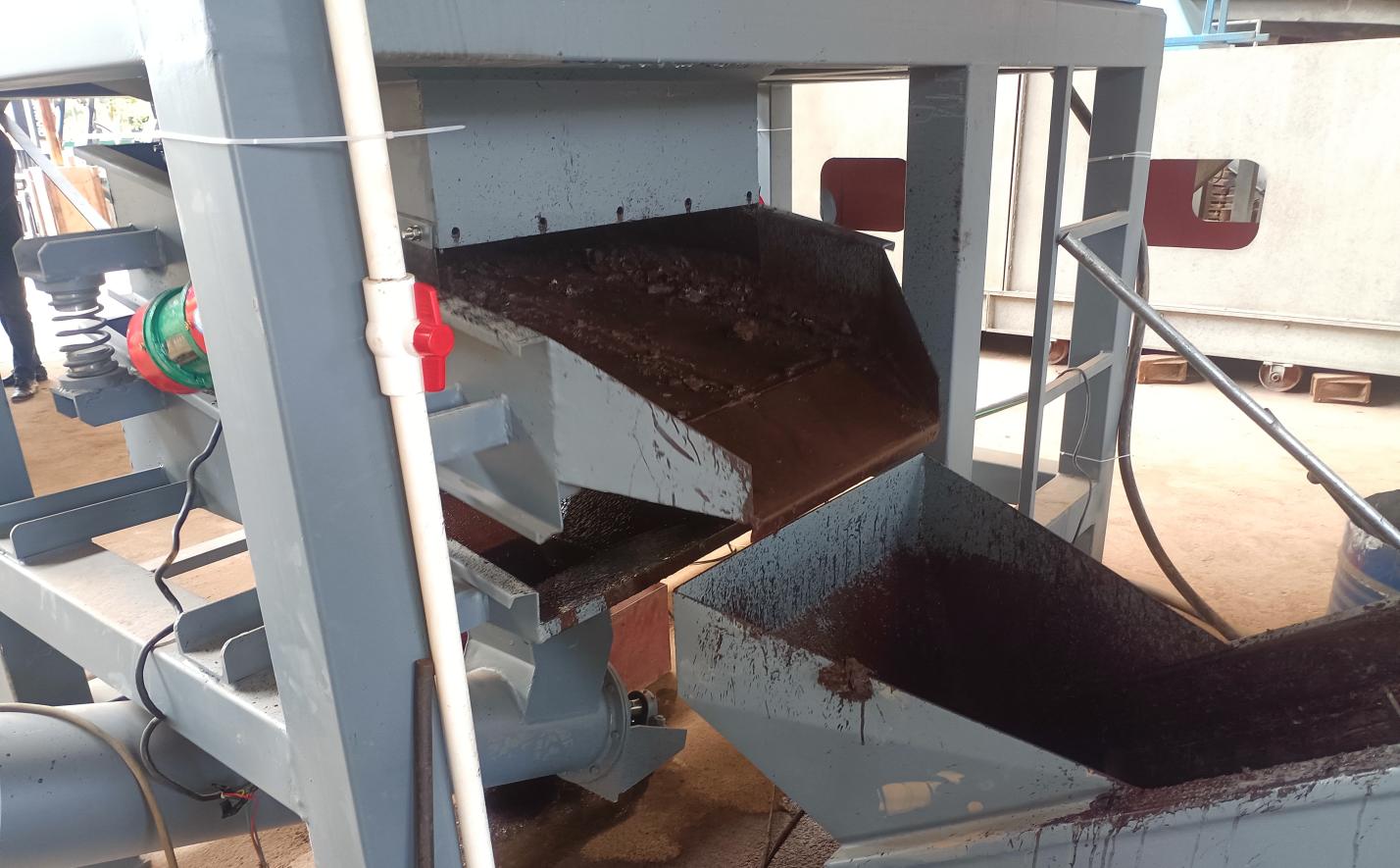
In the world of industrial manufacturing, mining, and material processing, the smallest components often drive the biggest results. Take microcrystalline ceramic balls, for example—these unassuming spheres, typically ranging from 5mm to 100mm in diameter, are the unsung heroes of ball mills, grinding machines, and extraction processes. Designed to replace traditional steel or alumina balls, they offer superior hardness, wear resistance, and chemical stability, making them indispensable in industries like lithium ore extraction, tailing ore processing, and even advanced material production.
But not all microcrystalline ceramic balls are created equal. The right supplier doesn't just deliver a product—they provide solutions tailored to your specific needs, whether you're running a lithium mine in Nevada, a cement plant in Texas, or a recycling facility processing circuit boards. With so many options on the market, how do you choose? We've scoured the country to find the top 7 suppliers that stand out for quality, innovation, and customer trust. From pioneers in nano ceramic technology to experts in bulk production, here's your guide to the best in the business.
1. CeramicSphere Technologies
Founded in 2001 in Pittsburgh, Pennsylvania, CeramicSphere Technologies has earned a reputation as the "go-to" for high-performance microcrystalline ceramic ball equipment. What started as a small R&D lab focused on mining efficiency has grown into a national leader, serving clients in 42 states and 15 countries.
Their claim to fame? A proprietary manufacturing process that creates microcrystalline ceramic balls with a uniform crystal structure, reducing internal stress and increasing durability by up to 35% compared to industry standards. "We spent five years perfecting our kiln technology," says James Harper, CeramicSphere's chief engineer. "The result is a ball that can withstand the high-impact grinding of lithium ore extraction without chipping or degrading—saving our clients thousands in replacement costs."
Beyond standard microcrystalline balls, they've expanded into specialized lines, including nano ceramic ball for ball mill equipment designed for ultra-fine grinding applications, such as processing rare earth minerals. Their NanoGrind Series uses advanced sintering techniques to create balls with a hardness rating of 9.2 on the Mohs scale, rivaling diamond dust in abrasion resistance.
What truly sets CeramicSphere apart, though, is their customer service. They offer on-site testing for clients, sending engineers to evaluate existing ball mill setups and recommend the optimal ball size, material blend, and loading density. "A mine in Colorado was struggling with low throughput," Harper recalls. "We tested three ball types, adjusted their mill speed, and helped them boost production by 18% in two months. That's the kind of partnership we build."
2. NanoComposite Innovations
Based in Portland, Oregon, NanoComposite Innovations (NCI) is the new kid on the block, but they're making waves with their cutting-edge nano composite ceramic ball equipment. Founded in 2015 by a team of materials scientists from MIT and the University of Washington, NCI set out to solve a critical problem: traditional ceramic balls are strong but brittle, prone to shattering under sudden temperature changes or uneven pressure.
Their solution? A nano composite ceramic formula that blends microcrystalline alumina with graphene oxide and zirconia nanoparticles. The result is a ball that's both tough and flexible—able to absorb impact without cracking. "Think of it like a ceramic with a 'memory'," explains Dr. Lisa Wong, NCI's founder. "When it deforms under pressure, it springs back, reducing wear and extending lifespan by up to 50% in high-heat applications like metal melting furnace equipment."
NCI's flagship product, the FlexiSphere 3000 , has become a favorite in the recycling industry, particularly for facilities processing circuit boards and lithium-ion batteries. "Circuit board recycling equipment often uses ball mills to pulverize e-waste, and the mix of metals, plastics, and glass is brutal on standard balls," Wong notes. "Our composite balls hold up longer, keeping downtime to a minimum."
Despite their high-tech focus, NCI prides itself on accessibility. They offer small-batch orders (starting at 500kg) for startups and research labs, alongside bulk production for industrial clients. Their Portland factory runs on 100% renewable energy, and they offset carbon emissions from shipping—appealing to eco-conscious buyers in states like California and New York.
3. Rocky Mountain Ceramic Works
For over three decades, Rocky Mountain Ceramic Works (RMCW) has been the backbone of the American West's mining and construction industries. Founded in 1990 in Denver, Colorado, this family-owned business specializes in rugged, no-nonsense microcrystalline ceramic ball equipment built for the harshest environments—think mountain mines, desert cement plants, and offshore oil rigs.
"Our clients don't care about fancy lab reports—they care about balls that work, day in and day out," says Maria Sanchez, RMCW's CEO and daughter of the founder. "We focus on consistency. Every batch of balls undergoes 12 quality checks, from raw material purity to final hardness testing. If even one ball fails, the entire batch is recycled."
RMCW's bread and butter is their ProGrade Series , a line of microcrystalline ceramic balls optimized for high-volume, low-maintenance grinding. They're a top choice for tailing ore extraction and crude ore extraction operations, where large mills process tons of material daily. A coal mine in Wyoming, for example, has used RMCW balls for 15 years, citing "zero unplanned downtime due to ball failure" as a key reason for loyalty.
While they don't chase the latest nano trends, RMCW has recently dipped into nano composite ceramic ball equipment with their EcoMax Line , designed for clients looking to reduce energy use. "These balls are 15% lighter than standard models but just as tough," Sanchez explains. "Lighter balls mean less energy to rotate the mill, which cuts electricity costs. A cement plant in Utah saw a 9% drop in their monthly power bill after switching—paying for the upgrade in eight months."
What clients love most about RMCW is their reliability. They maintain a 100,000-square-foot warehouse in Denver, stocked with over 5 million balls, ensuring 48-hour shipping to most Western states. "When a mine in Montana calls at 2 p.m. needing 10,000 balls by Thursday, we deliver," Sanchez says. "That's the Rocky Mountain promise."
4. Pacific NanoCeramics
On the opposite coast, Pacific NanoCeramics (PNC) in San Francisco, California, is redefining the industry with its focus on sustainability and cutting-edge nano ceramic ball equipment. Founded in 2010 by a group of green tech entrepreneurs, PNC set out to prove that industrial ceramics could be both high-performance and eco-friendly.
Their secret? A closed-loop manufacturing process that recycles 98% of production waste and uses 30% less energy than traditional kilns. "We start with recycled alumina powder from circuit board recycling equipment," explains Dr. Priya Patel, PNC's sustainability director. "Instead of mining new materials, we take the ceramic waste from e-waste recycling, purify it, and turn it into our microcrystalline balls. It's a circular economy in action."
But PNC doesn't sacrifice quality for green credentials. Their EcoSphere Nano line is a nano ceramic ball equipment that's become a hit in the lithium battery recycling sector. "Lithium-ion battery breaking and separating equipment relies on precise grinding to recover cobalt, nickel, and lithium," Patel says. "Our balls are engineered to grind battery casings and electrodes into uniform particles without contaminating the materials—critical for recycling efficiency."
They've also made waves with their BioSphere series, microcrystalline ceramic balls infused with antimicrobial agents for use in pharmaceutical and food processing mills. "Traditional steel balls can harbor bacteria in tiny cracks," Patel notes. "Our ceramic balls are non-porous and self-sterilizing, meeting FDA standards for food contact."
PNC's clients tend to be forward-thinking companies prioritizing ESG goals. A major lithium recycling plant in Nevada, for instance, chose PNC not just for their ball quality but for their carbon-neutral shipping and zero-waste certification. "Sustainability isn't a buzzword for us," Patel adds. "It's the reason we exist."
5. Midwest Ceramic Solutions
Based in Chicago, Illinois, Midwest Ceramic Solutions (MCS) has carved a niche as the "problem solver" of the ceramic ball world. Specializing in custom microcrystalline ceramic ball equipment, they thrive on projects other suppliers turn down—weird sizes, unique material blends, or one-of-a-kind applications.
"A client once needed balls shaped like hexagons for a specialized mixer," laughs Tom Reynolds, MCS's sales director. "We said, 'Why not?' Three months later, we delivered 2,000 hex ceramic balls that improved their mixing efficiency by 22%. That's the MCS difference: we don't just sell products—we engineer solutions."
Founded in 2008, MCS started as a spin-off from the University of Illinois' materials science department, bringing academic rigor to industrial challenges. Their team of 12 PhDs works closely with clients to design ceramic balls for niche uses, such as the CeramiCut Series —microcrystalline ceramic balls embedded with diamond particles for cutting through ultra-hard materials like silicon carbide in circuit board recycling equipment.
They're also leaders in nano composite ceramic ball equipment for extreme temperatures. Their ThermoShield balls can withstand temperatures up to 1,800°C, making them ideal for use in metal melting furnace equipment and medium frequency electricity furnace systems. "A foundry in Ohio was losing balls to thermal shock," Reynolds recalls. "We adjusted the ceramic's thermal expansion rate, and now their balls last six times longer."
While custom work is their focus, MCS also offers a line of standard microcrystalline balls, with quick turnaround times for small orders. "We know startups can't wait three months for a bulk shipment," Reynolds says. "We stock 20 standard sizes and can ship 500kg in 48 hours. It's how we build long-term relationships—supporting clients from prototype to production."
6. Southern Ceramic Industries
Headquartered in Atlanta, Georgia, Southern Ceramic Industries (SCI) is the South's largest producer of microcrystalline ceramic ball equipment, with a focus on affordability without compromising quality. Since 1995, they've made it their mission to make high-performance ceramics accessible to small and mid-sized businesses, from family-owned mines to local recycling centers.
"We believe every company deserves access to equipment that improves efficiency—not just the Fortune 500," says CEO Robert Chen. "That's why we offer tiered pricing: smaller orders get competitive rates, and bulk buyers get volume discounts. We even have a rental program for startups wanting to test our balls before committing."
SCI's ValueLine microcrystalline balls are their bestseller, priced 15-20% lower than premium brands while still meeting industry durability standards. They're a favorite for scrap metal yards, cable recycling equipment operators, and small-scale lithium ore extraction facilities. "A scrapyard in Alabama was using steel balls and replacing them monthly," Chen says. "They switched to our ValueLine balls and now replace them every six months—saving $3,000 a year, even with the higher upfront cost."
While they don't invest heavily in nano technology, SCI has recently introduced a budget-friendly nano ceramic ball for ball mill equipment, the BudgetNano , which uses a simplified nano-coating process to boost wear resistance without the premium price tag. "It's not for ultra-high-end applications," Chen admits, "but for most clients, it's the sweet spot between performance and cost."
SCI also stands out for its educational resources. Their website features free guides on ball mill maintenance, ceramic ball selection, and cost-saving tips, and they host quarterly webinars for clients. "Knowledge is power," Chen says. "The more our clients know about how ceramic balls work, the better decisions they'll make—and the happier they'll be with our products."
7. Western Advanced Ceramics
Rounding out our list is Western Advanced Ceramics (WAC), a California-based innovator pushing the boundaries of what microcrystalline ceramic balls can do. Founded in 2015 in San Diego, WAC has quickly gained attention for its focus on smart ceramics—balls embedded with sensors that monitor wear, temperature, and impact force in real time.
"Imagine a ball mill where each ball sends data to your phone, telling you when it's about to wear out or if the mill is misaligned," says Dr. Elena Rodriguez, WAC's founder and a former NASA materials scientist. "That's not science fiction—that's our SmartSphere technology, and it's revolutionizing predictive maintenance."
While their smart balls get the headlines, WAC's core strength is their advanced microcrystalline ceramic ball equipment. Using AI-driven manufacturing, they can adjust production parameters in real time, ensuring each batch meets exact specifications. Their PrecisionGrind line is used in critical applications like medical device manufacturing, where even a 0.1mm variation in ball size can affect product quality.
They've also made strides in nano composite ceramic ball equipment for the renewable energy sector. Their EcoWind balls are used in wind turbine gearbox manufacturing, where they grind gear teeth to micron-level precision. "Wind farms lose millions annually to gearbox failures," Rodriguez explains. "Our balls create smoother gear surfaces, reducing friction and extending gear life by up to 25%."
WAC's biggest challenge? Scaling production to meet demand. "We're growing faster than we expected," Rodriguez says. "We're opening a second factory in Texas next year, which will triple our capacity. The goal? To make smart ceramics the new standard, not the exception."
| Supplier | Key Specialties | Target Industries | Price Range | Lead Time | Standout Feature |
|---|---|---|---|---|---|
| CeramicSphere Technologies | Microcrystalline, nano ceramic for ball mills | Mining, lithium extraction, rare earth processing | Premium ($$$) | 2-4 weeks | On-site testing and engineering support |
| NanoComposite Innovations | Nano composite ceramic, eco-friendly production | Battery recycling, circuit board recycling | Mid-to-Premium ($$–$$$) | 3-5 weeks | Graphene-infused balls for flexibility and strength |
| Rocky Mountain Ceramic Works | Bulk microcrystalline, tailing ore extraction | Mining, cement, coal processing | Mid-Range ($$) | 1-3 days (Western U.S.) | Warehouse stock for emergency shipments |
| Pacific NanoCeramics | Sustainable nano ceramic, closed-loop manufacturing | Green tech, lithium recycling, pharmaceuticals | Premium ($$$) | 2-3 weeks | Recycled materials and carbon-neutral shipping |
| Midwest Ceramic Solutions | Custom shapes, high-temperature ceramics | Foundries, specialized manufacturing | Custom (varies) | 4-6 weeks (custom); 2 days (standard) | Engineered solutions for unique applications |
| Southern Ceramic Industries | Affordable microcrystalline, budget nano options | Small businesses, scrap yards, local recycling | Budget-to-Mid ($–$$) | 3-5 days | Tiered pricing and rental programs |
| Western Advanced Ceramics | Smart ceramics with sensors, precision grinding | Renewable energy, medical devices, aerospace | Premium ($$$) | 4-6 weeks | Real-time wear and performance monitoring |
Choosing Your Perfect Partner
When it comes to microcrystalline ceramic balls, there's no one-size-fits-all solution. Your choice depends on your industry, budget, and priorities—whether that's cutting-edge nano technology, bulk reliability, or eco-friendly production.
For mining and lithium ore extraction operations needing durability and expert support, CeramicSphere Technologies and Rocky Mountain Ceramic Works are hard to beat. If sustainability is your focus, Pacific NanoCeramics leads the pack with their closed-loop process. Small businesses on a budget should turn to Southern Ceramic Industries , while innovators chasing the next big thing will love Western Advanced Ceramics' smart balls.
Whichever supplier you choose, remember: the best ceramic balls aren't just products—they're investments in efficiency, reliability, and long-term success. Take the time to test, compare, and partner with a company that understands your unique needs. After all, in the world of industrial grinding, the right ball can make all the difference.