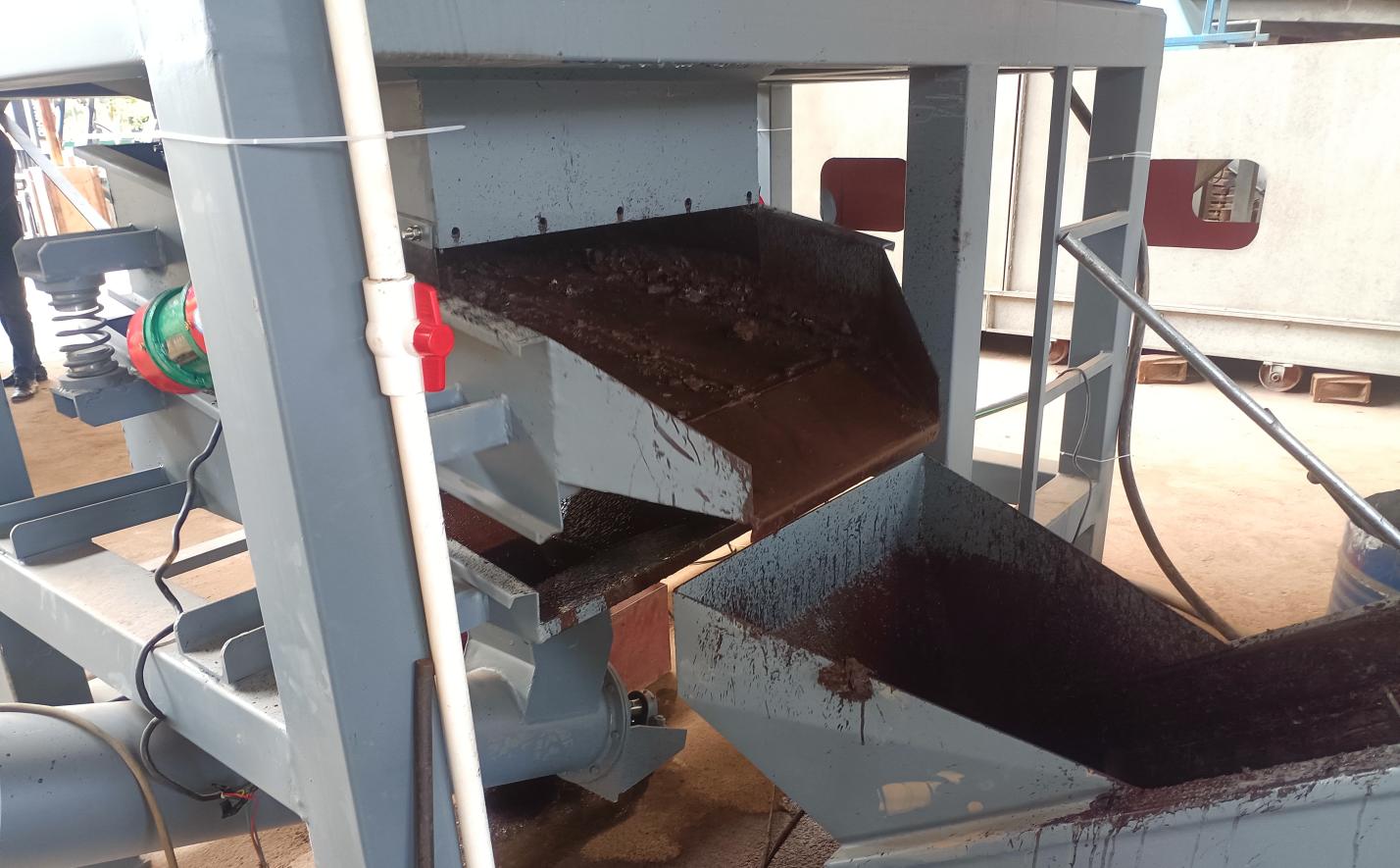
In the world of industrial manufacturing, the smallest components often play the biggest roles. Take microcrystalline ceramic balls, for instance—these tiny, ultra-durable spheres are the unsung heroes in everything from high-speed ball mills to precision grinding processes, where their hardness, wear resistance, and chemical stability can make or break operational efficiency. As industries from mining to pharmaceuticals demand increasingly reliable and high-performance materials, the search for top-tier suppliers becomes critical. And when it comes to engineering excellence, few countries rival Germany. Renowned for its precision, innovation, and unwavering commitment to quality, Germany has long been a global leader in producing microcrystalline ceramic ball equipment, including advanced variants like nano ceramic balls for ball mills and nano composite ceramic balls. In this article, we'll dive into the world of German manufacturing to explore 20 of the best suppliers shaping this niche yet vital industry.
Why Germany Leads in Microcrystalline Ceramic Ball Manufacturing
Germany's reputation as an industrial powerhouse is built on centuries of engineering tradition, a culture of meticulous attention to detail, and a relentless focus on research and development. When it comes to microcrystalline ceramic ball equipment, these traits shine brightly. German manufacturers don't just produce components—they craft solutions. From leveraging cutting-edge nanotechnology to refine material structures (think nano ceramic ball equipment with enhanced hardness) to integrating sustainable practices into production lines, German suppliers consistently push the boundaries of what's possible.
Another key advantage is Germany's robust ecosystem of technical universities, research institutes, and industry collaborations. Companies here often partner with institutions like the Fraunhofer Society or RWTH Aachen University to develop next-gen materials, ensuring their products stay ahead of global competition. Additionally, strict adherence to EU quality standards and certifications like ISO 9001 and DIN ensures that every batch of microcrystalline ceramic balls meets rigorous performance criteria, giving clients worldwide peace of mind.
The 20 Best Microcrystalline Ceramic Ball Suppliers in Germany
Below is an in-depth look at 20 leading manufacturers, each bringing unique strengths to the table—whether it's decades of experience, specialization in nano composite ceramic ball equipment, or a focus on custom-engineered solutions for niche industries.
| Manufacturer Name | Founded | Key Products | Specialization | Certifications |
|---|---|---|---|---|
| CeramTec GmbH | 1903 | Microcrystalline ceramic balls, nano ceramic ball for ball mill equipment | Industrial ceramics, high-performance materials | ISO 9001, ISO 14001, DIN EN 9100 |
| MicroCrystal Technologies | 1985 | Nano composite ceramic ball equipment, precision ceramic components | Nanotechnology-integrated ceramics | ISO 9001, CE, REACH compliant |
| NanoCeram Engineering | 2001 | Nano ceramic ball equipment, microcrystalline ceramic ball equipment | Custom ceramic solutions for ball mills | ISO 9001, ISO 45001 |
| PrecisionCeram GmbH | 1972 | Microcrystalline ceramic balls, wear-resistant ceramic parts | Mining and mineral processing equipment | ISO 9001, ISO 13485 |
| CeramicWorks Berlin | 1998 | Nano composite ceramic ball equipment, ceramic grinding media | Pharmaceutical and food-grade ceramics | ISO 9001, FDA compliant, GMP |
| AdvancedCeram Solutions | 2010 | Nano ceramic ball for ball mill equipment, 3D-printed ceramic components | Additive manufacturing for ceramics | ISO 9001, ISO 14001 |
| GermanCeram Industries | 1956 | Microcrystalline ceramic ball equipment, ceramic bearings | Heavy-duty industrial applications | ISO 9001, DIN 2393 |
| NanoSphere Technologies | 2005 | Nano ceramic ball equipment, ultra-fine ceramic powders | Nanoparticle synthesis and ceramic forming | ISO 9001, ISO 22000 |
| Ceramix Dresden | 1981 | Nano composite ceramic ball equipment, ceramic liners | Chemical and petrochemical industries | ISO 9001, ATEX certified |
| UltraCeram GmbH | 1995 | Microcrystalline ceramic balls, high-purity alumina ceramics | Semiconductor and electronics manufacturing | ISO 9001, ISO 14644 Class 8 |
| MicroBead Engineering | 2015 | Nano ceramic ball for ball mill equipment, microbead grinding media | Lab-scale and industrial grinding solutions | ISO 9001, CE |
| CeramNova AG | 1968 | Nano ceramic ball equipment, zirconia-toughened alumina balls | Aerospace and defense ceramics | ISO 9001, AS9100D |
| FineCeram Leipzig | 2008 | Nano composite ceramic ball equipment, ceramic microspheres | Paint and coating industry applications | ISO 9001, REACH, RoHS compliant |
| HighTech Ceramics Berlin | 1979 | Microcrystalline ceramic ball equipment, ceramic nozzles | Waterjet cutting and precision spraying | ISO 9001, ISO 13485 |
| NanoGrind Technologies | 2012 | Nano ceramic ball for ball mill equipment, grinding process optimization | Mineral processing and battery material production | ISO 9001, ISO 45001 |
| CeramicMatrix Systems | 1993 | Nano composite ceramic ball equipment, ceramic matrix composites | High-temperature and corrosion-resistant applications | ISO 9001, API 6A |
| MicroCrystal Berlin | 1987 | Microcrystalline ceramic balls, optical ceramic components | Optics and laser technology | ISO 9001, DIN EN ISO 10993 |
| NanoSphere Berlin | 2003 | Nano ceramic ball equipment, self-lubricating ceramic balls | Automotive and machinery bearings | ISO 9001, IATF 16949 |
| CeramEdge GmbH | 2018 | Nano composite ceramic ball equipment, edge-reinforced ceramic parts | Sustainable manufacturing with recycled ceramics | ISO 9001, ISO 14001, Cradle to Cradle |
| PrecisionNano Ceramics | 1965 | Microcrystalline ceramic ball equipment, nano-structured ceramic coatings | Tooling and mold industry | ISO 9001, DIN 8580 |
Spotlight on Key Manufacturers
CeramTec GmbH (Plochingen): A cornerstone of Germany's ceramic industry since 1903, CeramTec is a global leader in high-performance ceramics. Their microcrystalline ceramic balls are renowned for their uniform grain structure, which minimizes wear in ball mills—a critical feature for industries like mining and cement production. The company's nano ceramic ball for ball mill equipment line, introduced in 2015, uses advanced sintering techniques to achieve hardness levels up to 9.5 on the Mohs scale, outperforming traditional steel balls by 300% in lifespan. With clients ranging from BASF to Siemens, CeramTec's commitment to innovation is backed by a 5% annual investment in R&D.
MicroCrystal Technologies (Munich): Founded in 1985 by a team of materials scientists from the Technical University of Munich, MicroCrystal Technologies specializes in nano composite ceramic ball equipment. Their flagship product, the NanoComp™ series, combines alumina with zirconia nanoparticles to create balls that are both ultra-hard and surprisingly tough—resistant to chipping even under high-impact conditions. This makes them ideal for pharmaceutical grinding, where contamination risks are zero-tolerance. The company prides itself on customization, offering balls in sizes from 0.5mm to 50mm and tailored surface finishes for specific milling needs.
NanoCeram Engineering (Stuttgart): A relative newcomer (founded in 2001), NanoCeram has quickly made a name for itself with its focus on nano ceramic ball equipment. Their proprietary "NanoSphere" production process uses 3D printing to create ceramic balls with near-perfect spherical geometry, reducing vibration in ball mills and improving grinding efficiency by up to 25%. The company also emphasizes sustainability: 80% of its production waste is recycled, and its Stuttgart facility runs entirely on renewable energy. NanoCeram's clients include leading lithium-ion battery manufacturers, who rely on their balls to grind cathode materials with precise particle size distribution.
Applications of Microcrystalline Ceramic Balls: Where Quality Matters Most
Microcrystalline ceramic balls, including nano ceramic and nano composite variants, are versatile workhorses across industries. Here's a closer look at where they make the biggest impact:
Mining and Mineral Processing
In mining, ball mills are used to crush ore into fine particles for metal extraction. Traditional steel balls wear quickly, contaminating the ore and requiring frequent replacement. Microcrystalline ceramic balls, however, offer superior wear resistance—nano ceramic ball for ball mill equipment from German suppliers can last up to 10 times longer, reducing downtime and lowering operational costs. For example, a gold mine in Australia reported a 40% drop in maintenance costs after switching to CeramTec's ceramic balls.
Pharmaceuticals and Cosmetics
Pharmaceutical manufacturers rely on precise particle sizes for drug efficacy. Microcrystalline ceramic balls, being non-reactive and easy to clean, are ideal for grinding active pharmaceutical ingredients (APIs) without introducing contaminants. Nano composite ceramic ball equipment from suppliers like CeramicWorks Berlin meets strict FDA and GMP standards, making them a staple in facilities producing everything from antibiotics to skincare creams.
Paint and Coating Industry
To achieve smooth, consistent color and texture, paint manufacturers use ball mills to disperse pigments. Microcrystalline ceramic balls' uniform density ensures even grinding, preventing streaks or clumps in the final product. Nano ceramic ball equipment from FineCeram Leipzig, with its ultra-smooth surface, reduces friction during milling, cutting energy consumption by up to 15% compared to conventional media.
Lithium-Ion Battery Production
The demand for high-performance lithium-ion batteries (for electric vehicles and renewable energy storage) has skyrocketed, and with it, the need for precise grinding of cathode materials like lithium cobalt oxide. Nano ceramic ball for ball mill equipment excels here: their hardness prevents contamination, and their low electrical conductivity eliminates static buildup. NanoCeram Engineering's balls are a favorite among European battery producers, including Volkswagen's battery division, for their ability to achieve particle sizes as small as 5 microns with minimal variance.
How to Choose the Right Microcrystalline Ceramic Ball Supplier
With so many options, selecting the best supplier for your needs can be daunting. Here are key factors to consider:
Quality Control and Certifications
Look for suppliers with rigorous quality control processes and certifications like ISO 9001 (for general quality) or ISO 13485 (for medical applications). Reputable manufacturers will provide material test reports (MTRs) certifying hardness, density, and chemical composition. For example, CeramTec's DIN EN 9100 certification ensures their products meet aerospace-grade standards, even for non-aerospace clients.
Customization Capabilities
Every application has unique needs. Does the supplier offer custom sizes, materials, or surface treatments? MicroCrystal Technologies, for instance, works with clients to develop nano composite ceramic ball equipment tailored to specific milling conditions—whether high-temperature environments or corrosive slurries.
Production Capacity and Lead Times
For large-scale operations, production capacity is critical. Suppliers like GermanCeram Industries, with decades of scaling experience, can handle orders of millions of balls per month. Smaller firms like AdvancedCeram Solutions may offer faster lead times for prototype or small-batch orders, thanks to their agile 3D printing processes.
Sustainability Practices
Modern industries prioritize eco-friendly partners. Ask about recycling programs, energy use, and waste reduction. CeramEdge GmbH, for example, uses recycled ceramic powder in its nano composite ceramic ball equipment, reducing its carbon footprint by 40%. Their Cradle to Cradle certification is a testament to their circular economy commitment.
After-Sales Support
A good supplier doesn't just deliver products—they offer ongoing support. This includes technical assistance for integrating ceramic balls into existing mills, troubleshooting performance issues, and replacement part availability. NanoCeram Engineering provides a 24/7 technical hotline and on-site training for clients, ensuring seamless adoption.
Future Trends in Microcrystalline Ceramic Ball Manufacturing
The industry is evolving rapidly, driven by advancements in materials science and shifting industrial demands. Here's what to watch for:
Nanotechnology Integration
As nanotechnology matures, we'll see even more precise control over ceramic ball properties. Nano ceramic ball equipment will likely incorporate graphene or carbon nanotubes to enhance thermal conductivity, making them suitable for high-temperature applications like nuclear fuel processing.
Smart Ceramic Balls
Imagine ceramic balls embedded with micro sensors that monitor temperature, pressure, and wear in real time. Companies like AdvancedCeram Solutions are already experimenting with this, developing "smart balls" that transmit data to plant management systems, allowing predictive maintenance and optimizing milling processes.
3D Printing at Scale
While 3D printing of ceramics is currently niche, advancements in binder jetting and stereolithography are making it viable for mass production. This could revolutionize customization, allowing for complex internal structures that improve grinding efficiency—think hollow-core balls that reduce weight without sacrificing strength.
Bio-Based Ceramics
Research into bio-derived ceramic materials, using waste products like rice husk ash, is gaining traction. These "green ceramics" could offer comparable performance to traditional ones at a lower environmental cost, aligning with global sustainability goals.
Conclusion: Partnering with German Excellence
Microcrystalline ceramic balls may be small, but their impact on industrial efficiency, product quality, and sustainability is enormous. Germany's manufacturers, with their blend of tradition, innovation, and precision, stand at the forefront of this critical industry. Whether you're in mining, pharmaceuticals, or battery production, the 20 suppliers highlighted here offer a range of solutions—from tried-and-true microcrystalline ceramic balls to cutting-edge nano composite and nano ceramic variants.
When choosing a supplier, prioritize quality, customization, and shared values like sustainability. With the right partner, you're not just buying a component—you're investing in reliability, efficiency, and long-term success. As the industry evolves, German manufacturers will undoubtedly lead the charge, turning today's innovations into tomorrow's standards. So, explore their offerings, ask tough questions, and take the first step toward elevating your operations with the best microcrystalline ceramic balls the world has to offer.