Clean water isn't just a luxury—it's the foundation of healthy communities, thriving industries, and sustainable ecosystems. Whether it's the water that flows from your kitchen tap, the water used in manufacturing plants, or the wastewater released back into the environment, the systems that purify it play a silent but critical role in our daily lives. But not all water purification systems are created equal. From the technologies they use to the contaminants they target, understanding the differences between these systems can help you make smarter choices—whether you're a homeowner, a facility manager, or someone simply curious about how the water you use gets cleaned. In this article, we'll dive into the world of water purification, exploring key systems like water process equipment, wet and dry process equipment, effluent treatment machines, and even air pollution control systems that often work hand-in-hand with water purification. Let's break down what makes each unique, how they work, and why those differences matter.
Understanding Water Process Equipment: The Backbone of Purification
At the heart of any water purification setup lies water process equipment —a broad term that encompasses all the tools, machines, and systems designed to treat water from its raw state to a usable (or reusable) form. Think of it as the "infrastructure" of water treatment: without it, even the most advanced technologies would struggle to deliver clean water. This equipment isn't one-size-fits-all; instead, it's a collection of specialized components tailored to specific tasks, from removing sediment and bacteria to balancing pH levels and filtering out chemicals.
For example, in a municipal water treatment plant, water process equipment might include pumps to move water through the system, screens to catch large debris, and chemical dosing units to add disinfectants like chlorine. In an industrial setting, it could involve more heavy-duty machinery, such as filters designed to remove oil or heavy metals from manufacturing wastewater. What ties all these together is their shared goal: to transform water into a state that meets safety, regulatory, or operational standards. The beauty of water process equipment is its adaptability—whether you're treating water for drinking, agriculture, or industrial reuse, there's a configuration of these tools to fit the need.
Wet Process Equipment: Harnessing Liquid Power
When most people picture water purification, they're likely imagining wet process equipment —systems that use water itself (or other liquids) as part of the purification process. This approach relies on the power of liquids to dissolve, separate, or carry away contaminants, making it a go-to for treating water with high levels of dissolved solids, organic matter, or pathogens.
Let's take a closer look at how wet process equipment works. One common method is coagulation and flocculation: chemicals like aluminum sulfate are added to water, causing tiny particles (too small to filter out on their own) to clump together into larger "flocs." These flocs then settle out of the water during sedimentation, a step where gravity pulls them to the bottom of a tank. From there, the water moves to filtration—often through sand, gravel, or activated carbon—to catch any remaining particles. Finally, disinfection (using chlorine, UV light, or ozone) kills harmful bacteria and viruses.
While wet process equipment is highly effective at handling a wide range of contaminants, it does have trade-offs. It typically uses large amounts of water (or requires water to be part of the process), which can be a drawback in water-scarce regions. It also generates sludge—a byproduct of the sedimentation and filtration steps—that needs to be disposed of or treated separately. Despite these challenges, its versatility makes it a staple in many purification setups, especially where thorough contaminant removal is a priority.
Dry Process Equipment: Efficiency Through Air and Solids
On the flip side of the spectrum is dry process equipment —systems that rely on physical or mechanical methods, rather than large volumes of water, to purify or separate materials. Unlike wet processes, which use liquids to carry away contaminants, dry processes use air, vibration, or friction to separate solids from solids, or solids from gases. This makes them ideal for scenarios where water conservation is key, or where the water being treated has low liquid content (like sludge or solid waste).
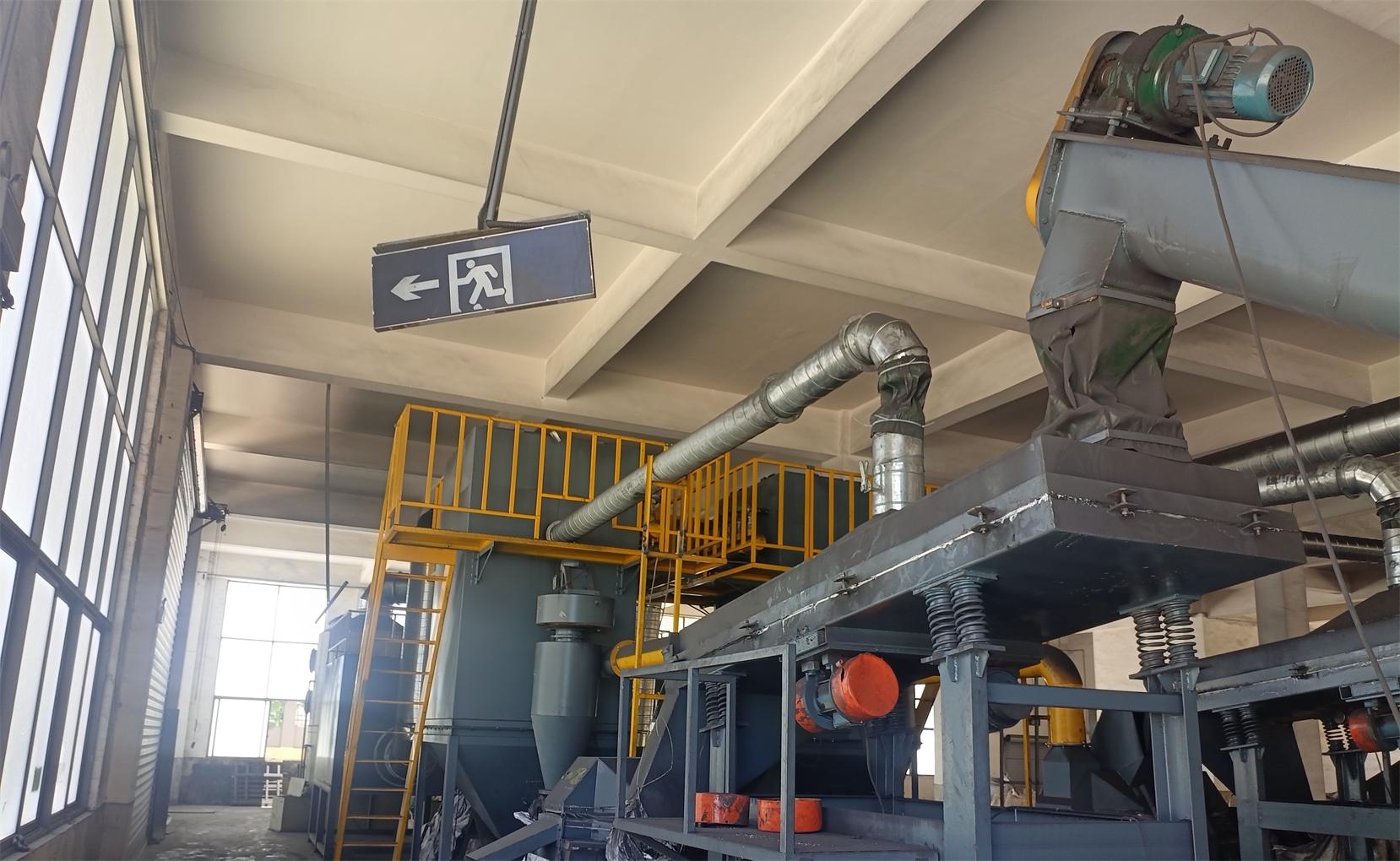
A common example of dry process equipment is the cyclone separator, which uses centrifugal force to remove dust and particles from air or gas streams. As air spins inside the cyclone, heavier particles are thrown outward and fall into a collection bin, while clean air exits through the top. Another example is dry screening, where vibrating screens with different-sized mesh separate large and small particles—think of a sieve separating flour from lumps, but on an industrial scale.
In water purification, dry process equipment often plays a supporting role, especially in pre-treatment. For instance, before water enters a wet process system, a dry screen might first remove large debris like sticks or leaves, reducing the load on downstream equipment. In some cases, dry processes can even replace wet ones entirely: a facility dealing with high-sediment water might use a dry centrifugal separator to spin out solids, avoiding the need for sedimentation tanks and reducing water usage.
Wet vs. Dry Process Equipment: A Side-by-Side Comparison
| Aspect | Wet Process Equipment | Dry Process Equipment |
|---|---|---|
| Working Principle | Uses water/liquids to dissolve, flocculate, or carry away contaminants. | Uses physical/mechanical methods (air, vibration, centrifugal force) to separate solids or particles. |
| Water Usage | High; relies on water as a medium for treatment. | Low to none; minimizes water use. |
| Contaminants Targeted | Dissolved solids, bacteria, organic matter, chemicals. | Solids, dust, sediment, large particles. |
| Maintenance Needs | Higher; prone to scaling, clogging, and sludge buildup. | Lower; simpler mechanics, less risk of liquid-related issues. |
| Ideal Applications | Drinking water treatment, wastewater with high organic content, industrial processes needing thorough chemical removal. | Pre-treatment for large debris, water-scarce regions, sludge/solid waste processing, air purification. |
Effluent Treatment Machine Equipment: Closing the Loop on Wastewater
While much of water purification focuses on making water "clean" for use, there's another critical piece of the puzzle: treating the water that's already been used. That's where effluent treatment machine equipment comes in. Effluent—defined as wastewater discharged from homes, businesses, or industries—often contains a mix of contaminants, from household detergents to industrial chemicals, that can harm the environment if released untreated. Effluent treatment machines are designed to "polish" this wastewater, removing or neutralizing harmful substances before it's returned to rivers, lakes, or the ground.
These machines are workhorses of sustainability. For example, in the textile industry, dyeing and printing processes release wastewater loaded with colorants, heavy metals, and alkalis. Effluent treatment equipment here might use a combination of biological treatment (where bacteria break down organic dyes) and membrane filtration (to trap remaining particles) to ensure the water meets environmental standards before discharge. In food processing, effluent treatment machines might focus on removing fats, oils, and starches, preventing clogs in public sewers and reducing oxygen depletion in water bodies.
What makes effluent treatment machine equipment unique is its focus on compliance. Governments worldwide have strict regulations on what can be in effluent, and these machines are engineered to meet (or exceed) those standards. They're also increasingly designed with reuse in mind: treated effluent might be repurposed for irrigation, cooling towers, or even non-potable industrial uses, turning "waste" into a valuable resource.
Air Pollution Control System Equipment: Beyond Water, Ensuring Clean Air
When we talk about water purification, it's easy to focus solely on the liquid itself—but many water treatment processes can release pollutants into the air, from chlorine fumes in disinfection to volatile organic compounds (VOCs) in industrial wastewater treatment. That's why air pollution control system equipment is often an unsung hero in water purification setups. These systems work alongside water process equipment to capture, filter, or neutralize air pollutants, ensuring that cleaning water doesn't come at the cost of dirty air.
For example, in a plant using ozone for water disinfection, ozone generators can release excess ozone gas, which is harmful to human health. Air pollution control equipment like scrubbers would then spray a mist of water or chemicals to trap and neutralize the ozone before it escapes into the atmosphere. In industrial settings where wastewater treatment involves heating (like in some desalination processes), incinerators or thermal oxidizers might be used to burn off VOCs, converting them into harmless byproducts like carbon dioxide and water vapor.
These systems aren't just about compliance—they're about protecting the people who work in and live around treatment facilities. A well-designed air pollution control system ensures that plant operators aren't exposed to toxic fumes, and nearby communities can breathe easy knowing that the water treatment process isn't compromising air quality. In this way, air pollution control system equipment bridges the gap between water purification and overall environmental health, making it a critical part of any responsible treatment setup.
Choosing the Right System: Factors to Consider
With so many options—water process equipment, wet and dry processes, effluent treatment machines, and air pollution control systems—how do you decide which is right for your needs? The answer depends on a few key factors:
1. Contaminant Type: Start by identifying what's in the water. If it's high in dissolved solids or bacteria, wet process equipment is likely necessary. If it's mostly sediment or large particles, dry processes might suffice. For industrial effluent with heavy metals or chemicals, effluent treatment machines are a must.
2. Water Availability: In regions with limited water, dry process equipment can drastically reduce usage. Conversely, areas with abundant water might prioritize wet processes for their thoroughness.
3. Scale: Small-scale operations (like a rural community well) might opt for compact wet process systems, while large industrial facilities may need a mix of wet, dry, and effluent treatment equipment to handle high volumes.
4. Regulations: Local environmental laws often dictate what contaminants must be removed and what emissions are allowed, which can influence whether air pollution control systems or advanced effluent treatment is required.
5. Cost and Maintenance: Dry process equipment may have lower upfront costs and maintenance needs, while wet processes might require more ongoing care (like sludge removal) but deliver higher water quality.
Water purification is a complex, multifaceted process—one that relies on a diverse array of systems working together to ensure the water we use, reuse, and release is safe for people and the planet. From the foundational role of water process equipment to the targeted power of wet and dry processes, the efficiency of effluent treatment machines, and the protective measures of air pollution control systems, each component plays a vital part in this mission. By understanding the differences between these systems, we can make more informed choices that balance effectiveness, sustainability, and practicality. After all, clean water isn't just about technology—it's about ensuring that every community, industry, and ecosystem has access to the most essential resource on Earth. And with the right equipment, that goal is well within reach.