The Recycling Revolution and the Need for Smart Conveying
Across the globe, the race to tackle waste and build circular economies is gaining momentum. From lead acid batteries powering cars to lithium-ion batteries in smartphones, from plastic packaging to circuit boards in old laptops, the sheer volume of recyclable materials is staggering. But here's the thing: collecting these materials is just the first step. To turn scrap into reusable resources, recycling facilities need to move materials efficiently—from shredders to separators, from compactors to storage. That's where conveying systems come in. For decades, bulky mechanical conveyors (think clunky belt systems or spiral augers) dominated the scene. They worked, but they took up massive space, guzzled energy, and often struggled to integrate with the diverse equipment in modern recycling plants. Enter the compact plastic pneumatic conveying system equipment—a game-changer that's quietly reshaping how recyclers operate, especially as the industry expands into tighter urban spaces and emerging markets.
Today, recycling isn't just for large industrial plants. Smaller facilities, urban warehouses, and even mobile operations are popping up, driven by local waste policies and the demand for sustainable practices. These operations don't have the luxury of sprawling factory floors. They need systems that can fit into existing spaces, adapt to different materials (from fine plastic pellets to shredded lithium battery components), and keep up with evolving equipment like dry process equipment or hydraulic briquetter equipment. The compact pneumatic conveying system checks all these boxes—and more. Let's dive into why it's becoming the go-to choice for recyclers worldwide.
The Compact Advantage: Redefining Space Efficiency in Recycling Facilities
Imagine trying to fit a recycling line for lithium-ion batteries into a 5,000-square-foot warehouse in downtown Tokyo. Traditional conveyors, with their fixed tracks and large support structures, would immediately eat up half the space, leaving little room for shredders, separators, or storage. But a compact plastic pneumatic conveying system? It's designed to squeeze into tight corners. These systems use modular, lightweight components—think small-diameter pipes, flexible hoses, and compact blowers—that can be mounted on walls, ceilings, or even stacked. Unlike mechanical conveyors, which require straight-line paths, pneumatic systems can navigate around existing equipment, using vertical and horizontal runs to move materials without bulky frames.
Take a small-scale lead acid battery recycling facility in Mexico City, for example. The plant processes 500 kg of batteries per hour, and its owner needed to add a system to convey plastic casings from the breaking machine to the hydraulic briquetter equipment. A traditional belt conveyor would have required knocking down a wall to extend the facility. Instead, they installed a pneumatic system with 2-inch diameter pipes that snake along the ceiling, dropping materials directly into the briquetter's hopper. Total footprint? Less than 10 square feet. "We didn't just save space—we saved months of construction and thousands in expansion costs," the plant manager noted.
Portability is another win. Many compact pneumatic systems are designed to be semi-mobile, with wheeled blowers and quick-connect hoses. This is a boon for recyclers who handle seasonal materials (like post-holiday plastic waste) or need to relocate operations. A plastic recycling co-op in Kenya, for instance, uses a portable pneumatic setup to move shredded plastic between temporary collection points and their main processing facility—no need for permanent infrastructure.
| Feature | Traditional Mechanical Conveyor | Compact Pneumatic Conveying System |
|---|---|---|
| Footprint | Large (requires 30-50 sq ft per 10 ft of length) | Minimal (pipes/hoses take <5 sq ft for same capacity) |
| Installation Flexibility | Fixed paths; requires structural modifications | Flexible routing (vertical/horizontal); mounts on walls/ceilings |
| Portability | Stationary; difficult to relocate | Semi-mobile options with wheeled components |
| Material Adaptability | Limited (struggles with fine powders or irregular shapes) | High (handles powders, pellets, and shredded materials) |
Beyond Size: Seamless Integration with Core Recycling Equipment
A conveying system is only as good as its ability to work with the rest of the recycling line. Modern facilities rarely use a single type of equipment—they might have a 2-shaft shredder for breaking down circuit boards, dry process equipment for separating metals, and hydraulic briquetter equipment for compacting plastic waste. The compact pneumatic conveying system isn't just small; it's a team player, designed to integrate with these tools effortlessly.
Consider dry process equipment, which is critical for recycling plastics and lithium battery components. Dry processes use air classification or electrostatic separation to sort materials, producing fine powders or small granules. Mechanical conveyors often struggle with these materials, as fines can leak through gaps or get stuck in moving parts. Pneumatic systems, however, use air pressure to transport materials through sealed pipes, preventing leaks and ensuring every particle reaches its destination. A circuit board recycling plant in South Korea, which processes 1,000 kg of boards daily, uses a pneumatic system to move shredded resin and metal powders from the dry separator to storage silos. "Before, we lost 5-8% of materials to conveyor spills," the plant engineer explained. "Now, it's less than 1%."
Then there's auxiliary equipment equipment—tools like pre-choppers, screeners, or metal detectors that prepare materials for processing. Pneumatic systems act as the "connective tissue" between these tools. For example, a refrigerator recycling equipment line in Poland uses a compact pneumatic system to move foam insulation from the shredder to a dedicated separator, then sends the plastic casing fragments to the hydraulic briquetter equipment. The system adjusts air pressure automatically, handling light foam and dense plastic without jamming—a flexibility mechanical conveyors can't match.
Even with heavy-duty equipment like hydraulic press machines, pneumatic systems shine. In a scrap metal recycling yard in Texas, a pneumatic conveyor moves metal chips from the press to a melting furnace, navigating around the press's large frame with ease. "We used to have a chain conveyor that broke down weekly under the weight of the chips," the yard owner said. "The pneumatic system? It's been running nonstop for 18 months."
Energy Efficiency and Environmental Stewardship: Aligning with Global Standards
Today's recyclers don't just need to move materials—they need to do it sustainably. Governments worldwide are tightening regulations on energy use and emissions, from the EU's Carbon Border Adjustment Mechanism to California's strict air quality laws. Compact pneumatic conveying systems are rising to the challenge, offering energy savings and easy integration with air pollution control system equipment.
Let's start with energy use. Mechanical conveyors rely on motors to drive belts, chains, or augers, which consume power even when materials aren't moving. Pneumatic systems, by contrast, use blowers or vacuum pumps that only run when materials are being transported. Modern systems also feature variable speed drives, adjusting air flow to match material volume. A study by the International Solid Waste Association found that compact pneumatic systems use 30-40% less energy than mechanical conveyors for the same throughput, especially when handling lightweight materials like plastic or foam.
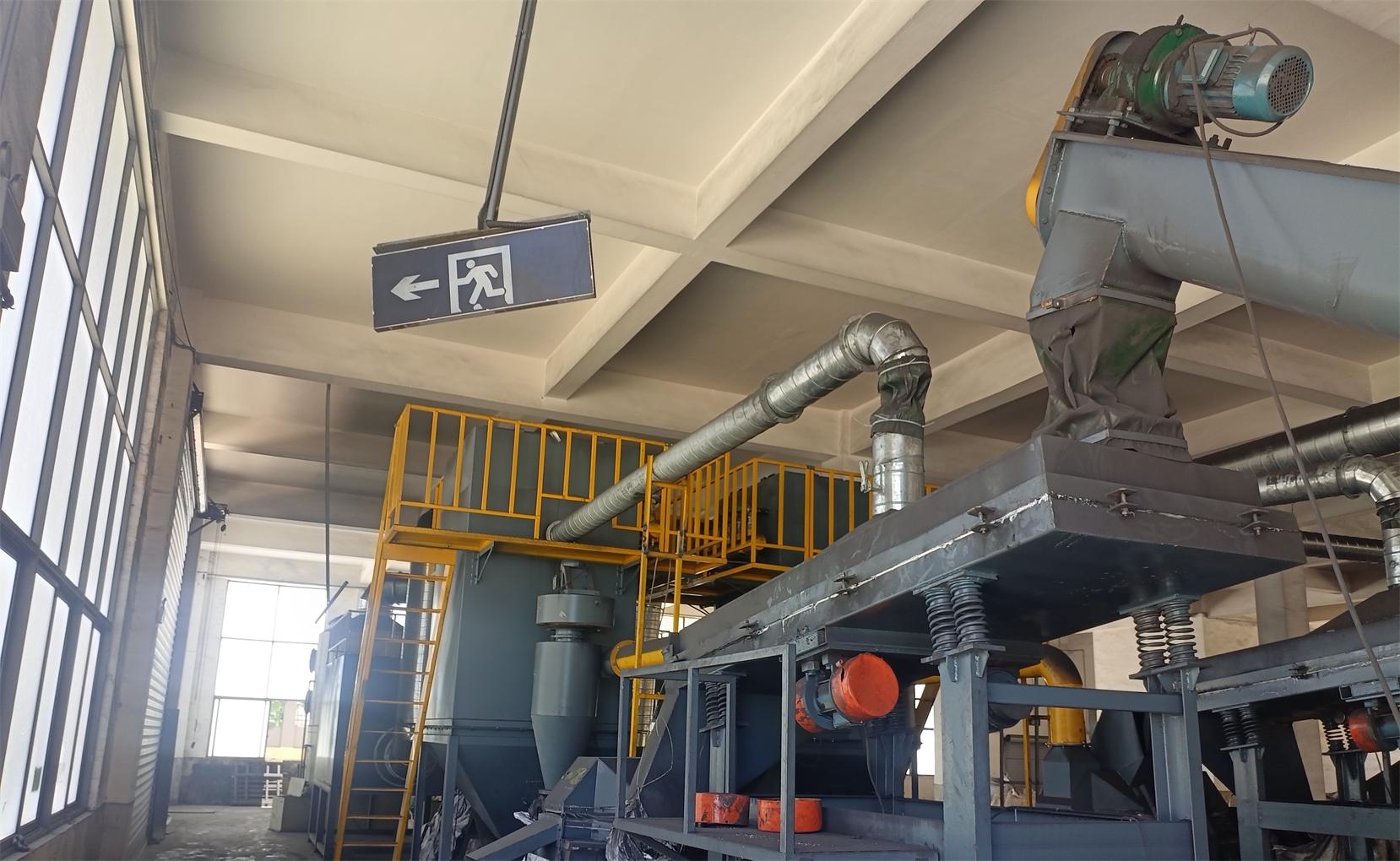
Emissions control is another key advantage. Pneumatic systems are inherently sealed, preventing dust and particulates from escaping into the air. When paired with air pollution control system equipment—like cyclone separators, bag filters, or electrostatic precipitators—they become even more effective. A lithium battery recycling plant in Germany, which processes 2,000 kg of batteries daily, uses a pneumatic system with a HEPA-filtered air pollution control unit to capture 99.9% of lithium dust and toxic fumes. "We meet the EU's strictest air quality standards, and the system's energy bill is 25% lower than our old mechanical conveyor," the plant's environmental officer reported.
Water conservation is a bonus, too. Unlike wet process equipment, which uses water to transport materials, pneumatic systems are dry, reducing water use and eliminating the need for wastewater treatment. This is a lifesaver in water-scarce regions, like parts of India or Australia, where recycling facilities face strict water restrictions.
Compliance with global standards isn't just about avoiding fines—it's about building trust with customers and partners. A lithium ore extraction plant in Chile, which supplies battery manufacturers in Europe, uses a compact pneumatic system to convey ore concentrate, ensuring no heavy metals leak into the environment. "Our clients demand sustainability reports, and the pneumatic system's low energy use and emissions are a selling point," the plant manager noted.
Cost-Effectiveness: Driving Adoption Across Emerging and Developed Markets
At the end of the day, recyclers need systems that deliver ROI. Compact pneumatic conveying systems excel here, offering lower upfront costs, minimal maintenance, and scalability—factors that appeal to both small startups in emerging markets and large corporations in developed economies.
Installation costs are a major draw. Traditional conveyors often require structural modifications: reinforcing floors, building support frames, or even expanding facilities. A compact pneumatic system, with its lightweight pipes and modular design, can be installed in days, not weeks. A plastic recycling startup in Vietnam, which launched with a $50,000 budget, installed a basic pneumatic system for $8,000—half the cost of a mechanical conveyor. "We used the savings to buy a better shredder," the founder said.
Maintenance is another cost-saver. Mechanical conveyors have dozens of moving parts—bearings, gears, belts—that wear out and need replacement. Pneumatic systems have far fewer components: a blower, a few valves, and sealed pipes. A lead acid battery recycling plant in South Africa reported cutting maintenance costs by 60% after switching to a pneumatic system. "We used to have a full-time mechanic just for the conveyors," the operations director said. "Now, he spends most of his time on other equipment."
Scalability is crucial for growing businesses. Compact pneumatic systems are easy to expand—simply add more pipes or a second blower—to handle increased throughput. A cable recycling equipment facility in Brazil started with a 500 kg/hour system and upgraded to 1,500 kg/hour by adding two more pipe runs and a larger blower. "No need to replace the entire system—we just built on what we had," the owner explained.
For emerging markets, where capital is often tight, these cost benefits are transformative. A small e-waste recycler in Nigeria, which processes 200 kg of circuit boards monthly, couldn't afford a mechanical conveyor. A compact pneumatic system, however, allowed them to start operations, turning a profit within six months. "We're now expanding to lithium battery recycling, and the same system will handle the materials," the owner said.
Real-World Impact: Case Studies from the Field
Case Study 1: Urban Lithium Battery Recycling in Berlin
In Berlin's Neukölln district, a 3,000-square-foot warehouse houses a lithium-ion battery recycling plant processing 800 kg of batteries daily. The facility uses a compact pneumatic conveying system to move shredded electrode materials from the breaking machine to the dry separator, then sends the recovered lithium powder to storage. "We're in the middle of the city—no space for big conveyors," the plant manager said. "The pneumatic system runs along the ceiling, takes up no floor space, and connects to our air pollution control system to filter fumes. We meet Germany's strict emissions standards, and our energy bill is 35% lower than similar plants with mechanical conveyors."
Case Study 2: Mobile Plastic Recycling in Rural Kenya
A co-op of 20 farmers in rural Kenya collects plastic waste from villages and processes it into pellets for export. Their operation is mobile, using a truck-mounted shredder and a compact pneumatic system with wheeled blowers. "We move from village to village, setting up in schoolyards or market squares," the co-op leader explained. "The pneumatic system lets us shred plastic and blow the pellets into storage bags in minutes. Before, we used buckets to carry the pellets—backbreaking work. Now, we process 300 kg/day instead of 50 kg."
Case Study 3: Circuit Board Recycling in China's Pearl River Delta
A circuit board recycling plant in Guangdong Province processes 2,000 kg of boards daily using a wet process equipment line. To move resin and metal sludge from the separator to the drying unit, the plant installed a compact pneumatic system with corrosion-resistant pipes. "Wet sludge was destroying our old belt conveyor—rust, clogs, constant breakdowns," the engineer said. "The pneumatic system handles the sludge effortlessly, and we added a filter to capture water vapor, which we reuse in the process. It's cut our water use by 20%."
Conclusion: The Future of Conveying in Global Recycling
The global recycling industry is at a crossroads. Demand for sustainable practices is growing, facilities are getting smaller and more distributed, and equipment is becoming more specialized. In this landscape, the compact plastic pneumatic conveying system equipment isn't just a tool—it's a catalyst for growth. Its space efficiency, adaptability, energy savings, and cost-effectiveness make it accessible to everyone, from urban startups in Berlin to rural co-ops in Kenya.
As recyclers tackle new materials—from lithium tailing ore to CRT glass—and adopt advanced equipment like nano ceramic ball mills or motor stator cutters, the need for flexible conveying will only increase. Pneumatic systems, with their ability to integrate with dry and wet process equipment, support air pollution control, and scale with demand, are poised to lead the way.
So, why is the compact plastic pneumatic conveying system expanding global access? Because it doesn't just move materials—it moves the recycling industry forward, one pipe, one blower, and one sustainable step at a time. For recyclers everywhere, that's a game-changer.